
Table of Contents
- Annapurna Circuit vs Annapurna Base Camp: Quick Comparison
- 1. What Is the Main Difference Between the Two Treks?
- 2. Which Trek Has Better Mountain Scenery?
- Annapurna Circuit: Changing Landscapes
- Annapurna Base Camp: Mountains All Around You
- 3. Which Trek Is More Difficult?
- Annapurna Circuit Difficulty
- Annapurna Base Camp Difficulty
- 4. How Many Days Do You Need?
- 5. What Are Accommodation and Food Like?
- 6. Which Trek Costs More?
- 7. When Is the Best Time to Trek?
- 8. Which Trek Should You Choose?
- Choose the Annapurna Circuit if:
- Choose Annapurna Base Camp if:
- Plan Your Annapurna Trek with Nepal Boundary Trekking
- Frequently Asked Questions (FAQs)
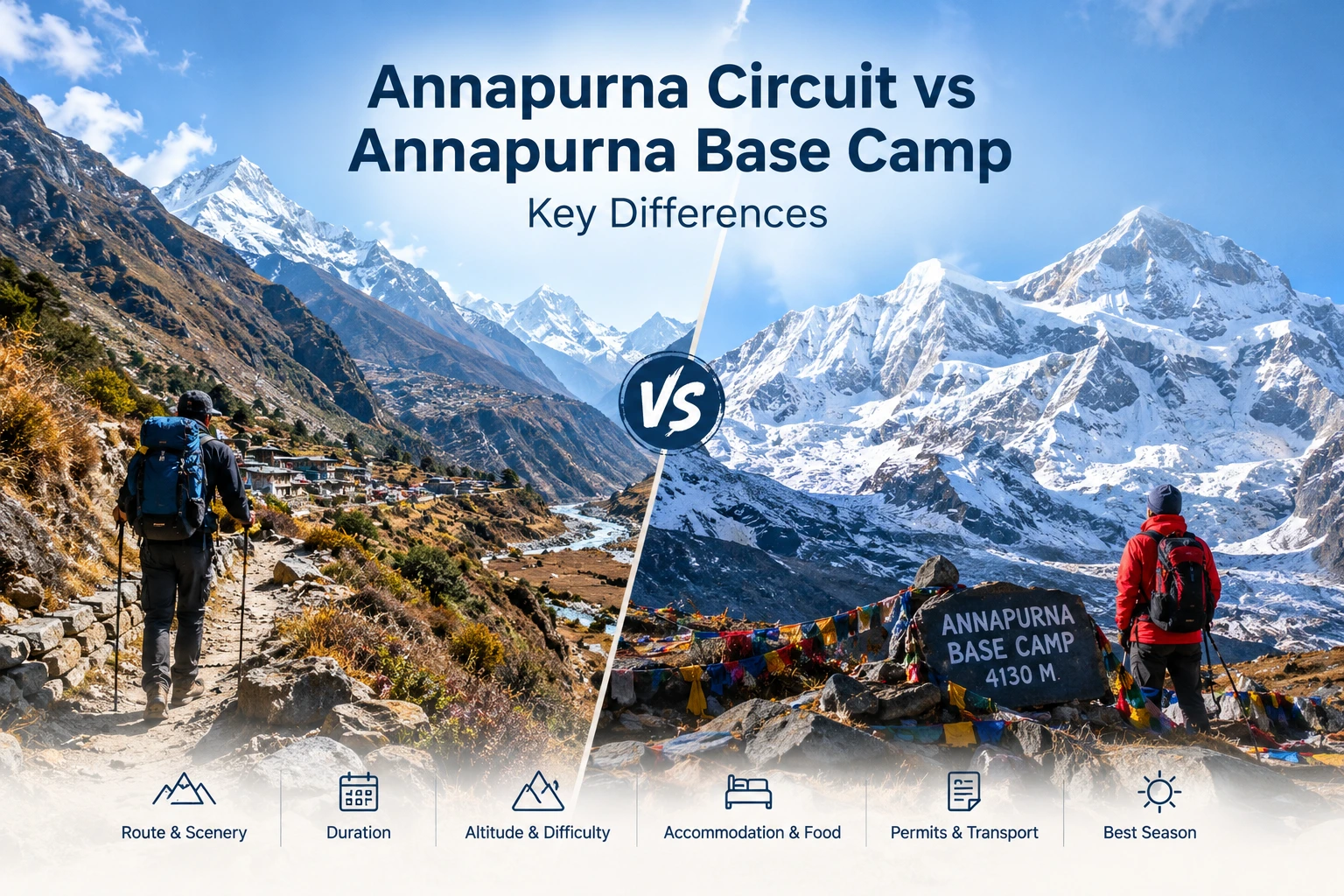
Annapurna Circuit vs Annapurna Base Camp: Which Trek Is Right for You?
22/10/2026
Choosing between the Annapurna Circuit and Annapurna BaseCamp trek depends on how much time you have, how challenging a trek you want,
and what you hope to see in the Himalayas.
The Annapurna Circuit takes you through changing landscapes,
traditional mountain villages, and high-altitude terrain before reaching
Thorong La Pass. Annapurna Base Camp follows a different route, leading you
into a mountain sanctuary surrounded by towering Himalayan peaks.
Both treks offer an excellent experience, but they suit
different travel plans. Here is how they compare, so you can choose the route
that fits your trip.
Annapurna Circuit vs Annapurna Base Camp: Quick Comparison
|
Feature |
Annapurna Circuit Trek |
Annapurna Base Camp Trek |
|
Trekking duration |
Around 12–18 days |
Around 5–10 days |
|
Highest point |
Thorong La Pass, about 5,416 m |
Annapurna Base Camp, about 4,130 m |
|
Main attraction |
Diverse landscapes and a high mountain pass |
Close-up views of the Annapurna mountain range |
|
Landscape |
River valleys, dry mountain terrain, villages and forests |
Forests, terraced hills, alpine scenery and a mountain
sanctuary |
|
Difficulty |
Challenging, mainly due to altitude and duration |
Moderate to challenging, with steep sections and stone
steps |
|
Acclimatisation |
Important because of the high altitude |
Important, although the maximum altitude is lower |
|
Best for |
Trekkers wanting a longer Himalayan journey |
Trekkers with less time who want to reach a mountain base
camp |
These durations are estimates, not fixed itineraries. Your
actual schedule will depend on the route, road access, acclimatisation days,
walking pace and transport arrangements.
1. What Is the Main Difference Between the Two Treks?
The biggest difference is the type of journey each trek
offers.
The Annapurna Circuit takes you around a large section of
the Annapurna region. Along the way, the scenery changes from green valleys and
cultivated hillsides to dry, rugged terrain around Manang and the high mountain
pass. The route also offers opportunities to experience local village life and
the cultural differences across the region.
The Annapurna Base Camp trek takes you into a natural
mountain bowl surrounded by major Himalayan peaks. The trail passes through
villages, forests and mountain landscapes before reaching Annapurna Base Camp.
For many trekkers, arriving at the base camp and seeing the mountains rising
around them is the highlight of the journey.
Choose the Annapurna Circuit for a longer, varied
trekking experience. Choose Annapurna Base Camp for a shorter journey focused
on reaching a spectacular mountain setting.
2. Which Trek Has Better Mountain Scenery?
Both routes offer impressive mountain views, but the scenery
is different.
Annapurna Circuit: Changing Landscapes
The Annapurna Circuit is a good choice if you enjoy seeing
different environments during one trek. The lower sections feature rivers,
green hills and villages. As you gain altitude, the landscape becomes drier and
more rugged.
The Manang area provides striking mountain scenery, while
the approach to Thorong La Pass brings a sense of high-altitude adventure.
After crossing the pass, the route continues towards Muktinath and the Mustang
side of the region.
This variety makes the circuit appealing to trekkers who
want more than mountain viewpoints.
Annapurna Base Camp: Mountains All Around You
The Annapurna Base Camp route offers a different reward. As
you approach the sanctuary, the mountains become increasingly prominent, and
the landscape feels more enclosed by the surrounding peaks.
The destination sits at approximately 4,130 metres, with
views of the Annapurna massif and nearby Himalayan summits. The route also
includes forested trails, traditional settlements and sections with stone
steps.
If your main goal is to stand among the mountains without
committing to a longer circuit, Annapurna Base Camp may be the better option.
3. Which Trek Is More Difficult?
Neither trek should be treated as an easy walk. Both require
preparation, but their challenges differ.
Annapurna Circuit Difficulty
The Annapurna Circuit is generally more demanding because of
its length, altitude and the crossing of Thorong La Pass at approximately 5,416
metres.
You may spend several days walking at high altitude, so
proper acclimatisation is essential. The weather around the pass can also
change quickly, and conditions may affect when it is safe to cross.
Regular walking, uphill training and cardiovascular exercise
can help you prepare. However, good fitness does not eliminate the risk of
altitude sickness.
Annapurna Base Camp Difficulty
Annapurna Base Camp is usually shorter, but that does not
make it effortless. Some sections involve steep climbs, long staircases and
sustained uphill walking.
The maximum altitude is lower than on the Annapurna Circuit,
but altitude-related illness remains possible. You should increase altitude
sensibly, stay hydrated and tell your guide if you develop symptoms such as a
headache, nausea, dizziness or unusual fatigue.
If you are new to Himalayan trekking, ABC may be the more
manageable choice, provided you are comfortable with several hours of walking
and steep terrain.
4. How Many Days Do You Need?
Your available time can make this decision much easier.
The Annapurna Circuit commonly takes around 12–18 days,
depending on the starting point, finishing point, road access and
acclimatisation schedule. Trekkers who want to explore more of the region may
need additional days.
Annapurna Base Camp often takes around 5–10 days. The exact
duration depends on where you begin, your walking pace and how much time you
spend along the route.
If you have limited annual leave or are combining trekking
with a wider Nepal trip, ABC may fit more easily into your schedule. If you can
spend two weeks or more in the mountains, the Annapurna Circuit offers a longer
journey with more landscape variation.
Avoid shortening either itinerary so much that you have no
time to adjust to altitude or respond to poor weather.
5. What Are Accommodation and Food Like?
Both treks are commonly completed using teahouse
accommodation. These are simple lodges that provide a place to sleep and meals
along the trail.
You can generally expect local Nepali meals, including dal
bhat, alongside other dishes depending on the lodge. Facilities vary by village
and altitude. Some places offer hot showers and charging facilities for an
extra fee, while others have more basic amenities.
On the Annapurna Circuit, accommodation and services vary as
the trail moves through different settlements and terrain. The Annapurna Base
Camp route also has teahouses, but availability and facilities can become more
limited in some sections.
During busy trekking periods, booking arrangements may
matter, particularly for popular routes. Your guide or trekking company can
help you plan overnight stops according to the itinerary and current
conditions.
6. Which Trek Costs More?
There is no single price that applies to every trek. The
total cost depends on the number of days, accommodation, meals, transport,
guide and porter services, permits, group size and the time of year.
The Annapurna Circuit often costs more overall because it
usually takes longer. However, the final price also depends on your chosen
route and travel arrangements.
Annapurna Base Camp may be more affordable for travellers
with a shorter itinerary, although transport and service choices can make a
significant difference.
Before booking, ask for a clear breakdown of what the
package includes. Check whether transport, permits, meals, accommodation, guide
services and porter costs are covered. Also confirm which expenses you will
need to pay separately.
Permit requirements and fees can change, so check the
current rules before travelling.
7. When Is the Best Time to Trek?
Spring and autumn are popular seasons for both routes.
Spring, from around March to May, brings milder
temperatures in many lower areas and the chance to see rhododendrons flowering
along forest trails. Weather and snow conditions at higher elevations can still
vary.
Autumn, from around September to November, often
offers favourable trekking conditions and good mountain visibility. It is also
a busy period, so popular teahouses and transport services may be in high
demand.
Winter can bring cold temperatures, snow and difficult
conditions, especially around Thorong La Pass. The monsoon season often brings
rain, clouds, slippery trails and possible landslides in some areas.
Conditions change from year to year. Before setting off,
check the latest weather forecast, trail conditions and local advice. This is
particularly important for the Annapurna Circuit because crossing Thorong La
Pass requires suitable conditions.
8. Which Trek Should You Choose?
Your priorities matter more than choosing the route that
sounds more famous.
Choose the Annapurna Circuit if:
- You
have around two weeks or more available for trekking.
- You
want to experience a wider range of landscapes.
- You
are interested in traditional mountain settlements and local culture.
- You
want the challenge of crossing Thorong La Pass.
- You
have prepared for sustained walking and high-altitude conditions.
Choose Annapurna Base Camp if:
- You
have about a week for your trek.
- You
want to reach a mountain base camp surrounded by Himalayan peaks.
- You
prefer a shorter itinerary.
- You
enjoy forest trails, village walks and mountain viewpoints.
- You
want a demanding trek without the very high pass crossing required on the
Annapurna Circuit.
If you remain undecided, consider your available days,
fitness, previous trekking experience and comfort with altitude. These factors
will help you make a more suitable choice than scenery alone.
Plan Your Annapurna Trek with Nepal Boundary Trekking
The right Annapurna trek should fit your schedule and
experience, not just your wish list.
Nepal Boundary Trekking can help you discuss route options,
itinerary planning and the practical arrangements for your trip. Before
choosing a package, ask about daily walking hours, acclimatisation, transport,
accommodation, included services and current trail conditions.
Planning an Annapurna trek? Contact Nepal BoundaryTrekking on WhatsApp with your travel dates, available days and preferred
trekking experience. You can discuss the options before deciding which route
suits you best.
Frequently Asked Questions (FAQs)
Q: Is Annapurna Circuit harder than Annapurna Base Camp?
A: The Annapurna Circuit is generally more demanding because it is longer and includes Thorong La Pass at approximately 5,416 metres. Annapurna Base Camp has steep sections and altitude-related risks, but it does not require crossing that high pass.
Q: Is Annapurna Base Camp suitable for beginners?
A: It can suit beginners who are reasonably fit, prepare properly and follow a sensible itinerary. The trail includes steep climbs and long staircases, so regular walking and uphill training are helpful. Beginners should also understand the risks of trekking at altitude.
Q: Can I complete the Annapurna Circuit in 10 days?
A: Some itineraries are designed around a shorter schedule, but feasibility depends on road access, route choices, acclimatisation and current conditions. Do not remove essential acclimatisation time just to finish sooner. Discuss the itinerary with an experienced local trekking professional before booking.
Q: Which trek is better for mountain photography?
A: Both are excellent options. The Annapurna Circuit provides changing landscapes, villages and high mountain terrain. Annapurna Base Camp offers a closer setting among Himalayan peaks. Your choice should depend on the types of scenery you want to photograph and the time you have available.
Q: Do I need a guide for Annapurna Circuit or Annapurna Base Camp?
A: Trekking rules and permit requirements can change, so check the latest official guidance before travelling. A qualified local guide can also help with route planning, local conditions, accommodation arrangements and responding to problems on the trail.
Q: Can I do both Annapurna Circuit and Annapurna Base Camp on one trip?
A: It may be possible if you have enough time, but combining them requires careful planning because the routes and transport arrangements differ. Allow sufficient days for walking, acclimatisation and unexpected delays. A trekking company can help you assess whether combining both routes is realistic for your dates.