Table of Contents
- Why Seasonal Trekking Matters in Nepal
- Spring Season (March–May)
- 1. Annapurna Base Camp Trek (ABC)
- 2. Ghorepani Poon Hill Trek
- 3. Langtang Valley Trek
- Summer/Monsoon Season (June–August)
- 1. Upper Mustang Trek
- 2. Nar Phu Valley Trek
- 3. Dolpo Region Trek (Lower or Upper Dolpo)
- Autumn Season (September–November)
- 1. Everest Base Camp (EBC) Trek
- 2. Manaslu Circuit Trek
- 3. Annapurna Circuit Trek
- Winter Season (December–February)
- 1. Mardi Himal Trek
- 2. Langtang Valley
- 3. Tengboche & Everest View Trek
- Quick Summary: Best Treks by Season in Nepal
- Spring (March–May)
- Summer/Monsoon (June–August)
- Autumn (September–November)
- Winter (December–February)
- Conclusion
- Frequently Asked Questions (FAQs)
Best Trekking Destinations in Nepal by Season (2026 Guide)
02/12/2025
Nepal is a paradise for trekkers, and the best part is that every
season has something unique to offer. Whether you love crystal-clear mountain
views, blooming rhododendrons, quiet trails, or snowy adventure vibes, Nepal
always has a perfect trek waiting for you.
In this 2026 seasonal guide, you’ll find the best treks
for each season, what kind of weather to expect, and why each destination
shines during that particular time of year.
Why Seasonal Trekking Matters in Nepal
Nepal has dramatic weather shifts. Some trails are magical
in spring, some shine in autumn, and some become almost mystical in winter.
Choosing the right trek for the right season makes your experience safer, more
enjoyable, and simply unforgettable.
Spring Season (March–May)
Best for flowers, mild weather, longer days, and clear
mountain panoramas.
Spring is when Nepal wakes up. Forests burst with pink and
red rhododendrons, temperatures are comfortable, and the skies stay relatively
clear. If you love colorful landscapes and a soft vibe on the trails, this is
your season.
1. Annapurna Base Camp Trek (ABC)
Why this trek is best in spring:
- Rhododendron
forests at full bloom
- Clear
mornings with stunning Annapurna views
- Comfortable
temperatures for long trekking days
This classic trek becomes even more breathtaking in spring,
especially as you walk through bamboo forests, alpine pastures, and pink flower
corridors leading up to the Annapurna sanctuary.
2. Ghorepani Poon Hill Trek
Perfect for: Beginners, families, quick trips
Spring literally paints this region in color. Poon Hill’s
sunrise hits differently golden peaks, clear skies, and a 360-degree view of the
Annapurna and Dhaulagiri ranges. It’s an easy, rewarding trek for almost
anyone.
3. Langtang Valley Trek
Why spring fits Langtang:
- Wildflowers
carpet the whole valley
- The
weather is warmer at higher altitudes
- Stunning
contrasts between pine forests and snowy peaks
Langtang is one of the most underrated treks in Nepal.
Spring turns the valley into a bright, cheerful landscape perfect for nature
lovers.
Summer/Monsoon Season (June–August)
Best for rain-shadow treks, lush landscapes, and fewer
crowds.
While monsoon brings heavy rain to most of Nepal, the
northern rain-shadow regions stay surprisingly dry and sunny. For trekkers who
don’t mind a little adventure and want peaceful trails, the monsoon is actually
a great time.
1. Upper Mustang Trek
Why Upper Mustang works in monsoon:
- It lies beyond the Himalayas, so rainfall is minimal
- Dry,
desert-like terrain stays perfect for trekking
- Great
time for exploring ancient caves and Tibetan-influenced culture
Upper Mustang feels like stepping into another world, with
its windy deserts, red cliffs, ancient monasteries, and the legendary walled
city of Lo Manthang.
2. Nar Phu Valley Trek
Highlights:
- Dramatic
cliffs, high passes, and remote villages
- Very
little rainfall
- Off-the-beaten-path
adventure
Nar Phu Valley is wild, untouched, and mystical. If you're
into true Himalayan wilderness, this trail feels like a secret.
3. Dolpo Region Trek (Lower or Upper Dolpo)
Why Dolpo shines in monsoon:
- Relatively
dry weather
- Crystal-clear
turquoise lakes like Phoksundo look unreal
- Tibetan-style
culture and landscapes
Dolpo is a remote, rugged, and incredibly beautiful region. Monsoon
gives it this fresh, raw vibe that trekkers love.
Autumn Season (September–November)
Best for crystal-clear skies, stable weather, peak
mountain views, and vibrant festivals.
Autumn is the golden season for trekking in Nepal.
The monsoon dust settles, visibility becomes incredible, and temperatures stay
perfect. It’s the busiest season, but also the most rewarding.
1. Everest Base Camp (EBC) Trek
Why autumn is perfect:
- The
clearest mountain views of the year
- More
stable weather at high altitude
- Best
time to explore Namche, Tengboche, and Khumbu Icefall
From Sherpa culture to hanging bridges to the mighty Everest
itself, this trek is a dream for many, and autumn brings out its best.
2. Manaslu Circuit Trek
A great alternative to the Annapurna Circuit
Autumn offers:
- Crisp
mountain air and stunning clarity
- Ideal
conditions for crossing the Larke La Pass
- Less
crowded compared to other major routes
Manaslu feels raw, traditional, and incredibly scenic.
3. Annapurna Circuit Trek
Why autumn fits perfectly:
- Thorong
La Pass conditions are safest
- Clear
blue Himalayan skies
- Best
visibility for the massive Annapurna and Dhaulagiri ranges
If you want a long, culturally rich, varied trek, this is
your season and your trail.
Winter Season (December–February)
Best for quiet trails, peaceful landscapes, and
snow-covered scenery.
Winter trekking is cold but magical. Lower-altitude treks
become calm and atmospheric, and you get to enjoy snowy views without crowds.
1. Mardi Himal Trek
Why winter works:
- Snowy
ridgelines look magical
- Lower
crowds compared to autumn
- Clear
skies with dramatic close-up views of Machhapuchhre
Mardi Himal is short, scenic, and perfect for winter
adventure lovers.
2. Langtang Valley
Yes, Langtang also works beautifully in winter.
Highlights:
- Crisp
air and clear mountain views
- Fewer
trekkers, peaceful villages
- Gentle
light snow in the upper valley
Winter gives Langtang a very serene vibe.
3. Tengboche & Everest View Trek
Perfect for those who want Everest views without extreme
cold at higher altitudes:
- Trek
only up to 3,800m
- Khumjung,
Namche, and Tengboche monasteries look stunning in the snow
- The
best low-altitude views of Everest during winter
This one’s ideal if you want the feel of the Everest region
without the commitment of EBC.
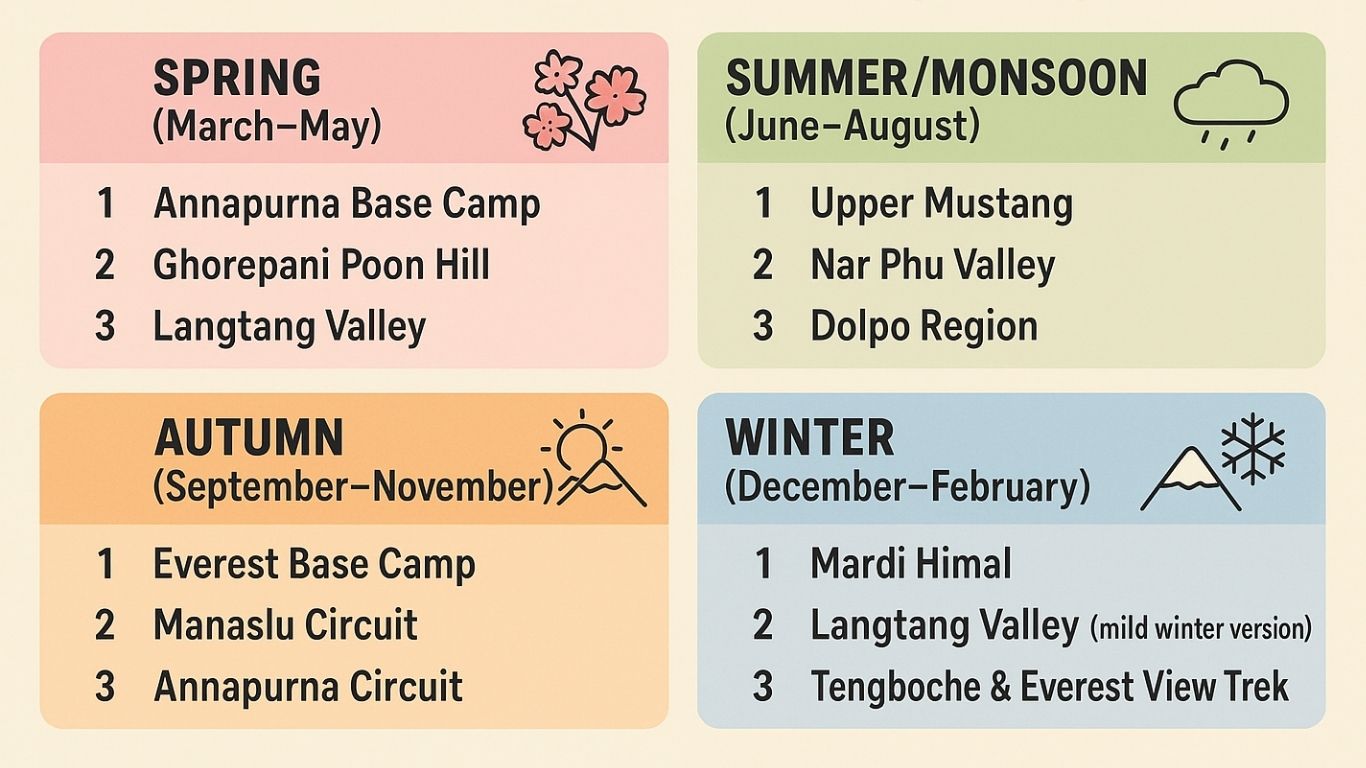
Quick Summary: Best Treks by Season in Nepal
Spring (March–May)
Summer/Monsoon (June–August)
- Upper
Mustang
- Nar
Phu Valley
- Dolpo
Region
Autumn (September–November)
Winter (December–February)
- Mardi Himal
- Langtang Valley (mild winter version)
- Tengboche & Everest View Trek
Conclusion
Nepal is truly an all-season trekking destination; you just need to pick the trek that matches the season. Whether you want wild adventure, peaceful trails, festival vibes, or full-on mountain drama, 2026 is shaping up to be an awesome year to explore Nepal’s trails.
Frequently Asked Questions (FAQs)
Q: What is the best season for trekking in Nepal?
A: Autumn (September–November) is considered the best season due to stable weather, clear skies, and comfortable temperatures. But Nepal offers great treks in all seasons if you pick the right route.
Q: Which trek is ideal for beginners in 2026?
A: Ghorepani Poon Hill, Mardi Himal, and Langtang Valley are great beginner-friendly treks with rewarding views and moderate difficulty.
Q: Can you trek in Nepal during the monsoon?
A: Yes! Regions like Upper Mustang, Nar Phu Valley, and Dolpo lie in the rain-shadow area, making them perfect for monsoon trekking.
Q: What is the best winter trek in Nepal?
A: Mardi Himal, Langtang Valley, and the Tengboche–Everest View Trek are top winter options with peaceful trails and stunning snowy landscapes.
Q: Which trek offers the best mountain views?
A: Everest Base Camp, Annapurna Base Camp, and Manaslu Circuit all offer exceptional views of the world’s tallest peaks.
Q: Are the trekking routes crowded in 2026?
A: Autumn and spring will likely be busy, but winter and monsoon offer quieter, more peaceful experiences.
Q: Is a permit required for trekking in Nepal?
A: Yes. Most treks require TIMS and national park/conservation permits. Restricted areas like Upper Mustang, Dolpo, and Nar Phu need special permits.