
Table of Contents
- The Shift to Luxury Lodge Trekking
- Upgraded Accommodation Standards
- Erasing High-Altitude Risks
- The 3 Best Low-Altitude Routes
- The Annapurna Foothills Luxury Circuit
- Everest View Luxury Trek
- Nagarkot to Dhulikhel Ridge Walk
- Route Comparison for Older Adults
- Trail Pacing and Porter Support
- The Daily Walking Strategy
- Managing Luggage and Weight
- The Best Seasons for Senior Trekking
- October and November
- March and April
- Medical Clearances and Physical Prep
- Consulting Your Doctor
- Basic Physical Training
- Frequently Asked Questions (FAQs)
Easy Treks in Nepal for Seniors: Low Altitude Luxury Routes
29/08/2026
Finding easy treks in Nepal for seniors requires selecting
routes below 3,500 meters that swap freezing teahouses for heated luxury
lodges. This guide outlines the exact low-altitude itineraries offering gentle
daily pacing, premium comfort, and zero compromise on mountain views. You will know how older adults can safely experience the Himalayas without risking
acute mountain sickness or joint injuries. Plan your upcoming trip confidently
using these proven, low-risk trekking circuits.
The Shift to Luxury Lodge Trekking
There is no need to compromise their comfort to see the world's highest mountains and their beauty. Nepal's trekking infrastructure now includes premium circuits designed entirely around safety, warm beds, and short walking days.
Upgraded Accommodation Standards
Premium lodge networks, such as Ker & Downey in the
Annapurna region and Yeti Mountain Home near Everest, completely redefine
Himalayan trekking. These properties replace basic wooden beds with thick
duvets, electric blankets, and private en-suite bathrooms featuring reliable
hot water. Trained chefs prepare organic, farm-to-table meals daily, ensuring
you avoid the repetitive, heavy food served in standard trekking lodges. This
high level of comfort guarantees your muscles recover fully after every hike.
Erasing High-Altitude Risks
Altitude sickness poses the most significant threat to older
trekkers. You eliminate this risk almost entirely by choosing routes that stay
below the critical 3,500-meter threshold. For example, the premium Annapurna
Foothills trek peaks at just 1,981 meters, completely bypassing the danger zone
for acute mountain sickness. You still secure unobstructed views of the
Annapurna range without putting unnecessary strain on your heart and lungs.
The 3 Best Low-Altitude Routes
You must prioritize trails featuring gradual ascents and
short distances between villages. These three specific itineraries provide the
ideal balance of scenery and physical safety for older travelers.
The Annapurna Foothills Luxury Circuit
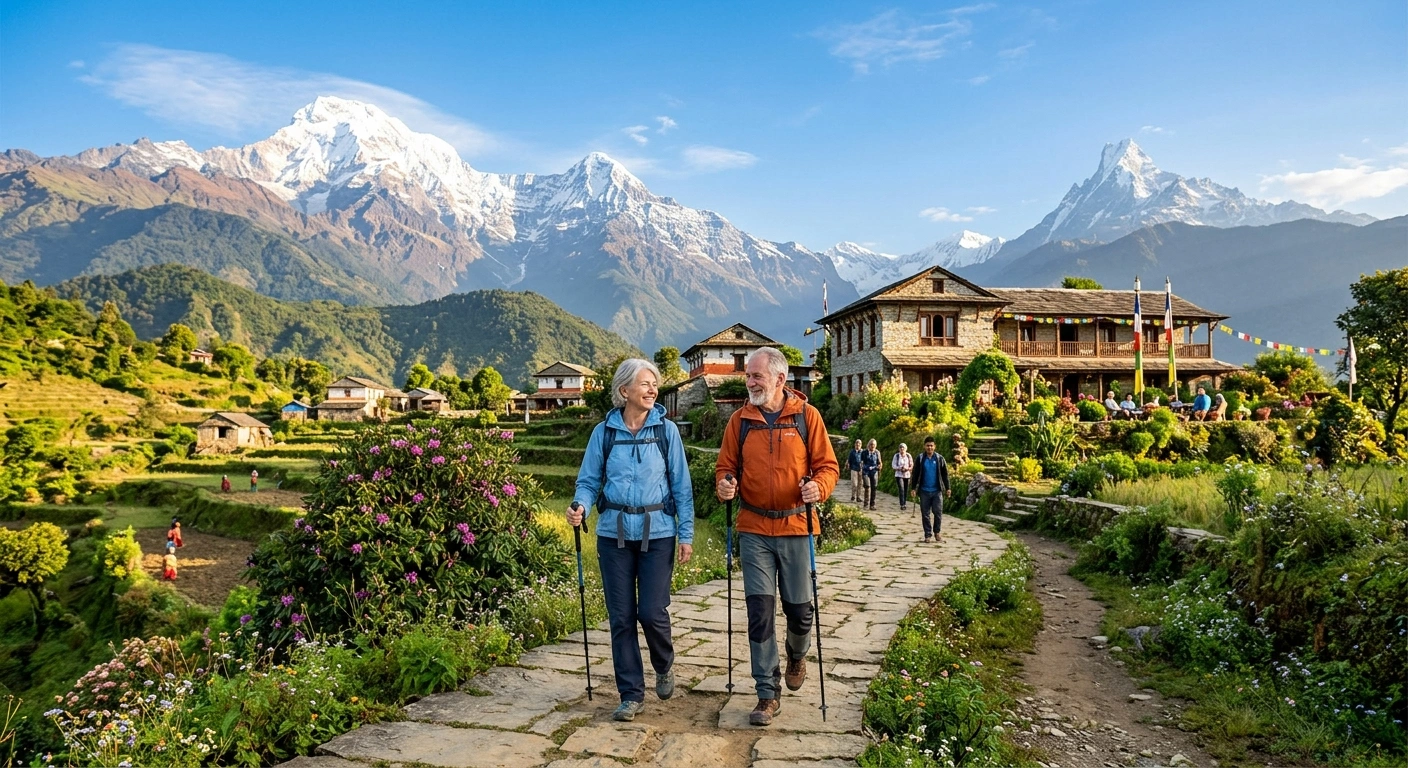
This three-to-five-day route ranks as the most comfortable
short trek in the country. You walk along wide, well-maintained paths through
terraced rice paddies and traditional Gurung farming communities. Daily walking
times rarely exceed four hours, giving you ample time to rest on the lodge
patios each afternoon. You will need a standard Annapurna Conservation Area
Permit (ACAP) for this route, which costs exactly NPR 3,000 for foreign
trekkers in 2026.
Everest View Luxury Trek
You can see Mount Everest's beauty safely without enduring the
grueling 14-day hike to Base Camp. This route begins with a scenic 35-minute
domestic flight from Kathmandu directly into Lukla. From there, you walk just
four hours a day along the Dudh Kosi River, crossing stable steel suspension
bridges to reach the luxury lodges in Monjo. The trail ends at Namche Bazaar
(3,440 meters), where you sleep in heated rooms featuring direct views of the
surrounding Himalayan giants.
Nagarkot to Dhulikhel Ridge Walk
Travelers who want to avoid domestic mountain flights
entirely should target the Kathmandu Valley rim. This simple one-to-two-day
hike stays around 2,100 meters and requires zero government trekking permits.
You walk along gentle, forested ridges that offer massive panoramic views of
both the Langtang and Everest ranges on clear mornings. You finish the walk at
premium luxury resorts in Dhulikhel, making this the absolute easiest trekking
option available.
Route Comparison for Older Adults
Review this data breakdown to select the exact route that
matches your timeline and physical fitness level.
|
Trekking Route |
Max Altitude |
Days Required |
Daily Walking |
Key Advantage |
|
Annapurna Foothills |
1,981 meters |
3 - 5 Days |
3 - 4 Hours |
Zero altitude risk, Ker & Downey lodges |
|
Everest View Trek |
3,440 meters |
5 - 7 Days |
4 - 5 Hours |
Direct views of Mt. Everest, Sherpa culture |
|
Nagarkot Ridge |
2,100 meters |
1 - 2 Days |
3 - 4 Hours |
No flights required, easy valley access |
|
Ghorepani Poon Hill |
3,210 meters |
4 - 5 Days |
4 - 6 Hours |
Incredible sunrise, rhododendron forests |
Trail Pacing and Porter Support
Success on a senior trek depends entirely on how effectively
you manage your energy output during the first 48 hours. Rushing the initial
ascents will rapidly deplete your stamina and ruin the remainder of your
vacation.
The Daily Walking Strategy
"The secret to senior trekking is capping your daily
trail time at four hours and actively avoiding routes dominated by steep stone
stairs," advises our lead Kathmandu guide. Start walking early in the
morning when temperatures remain cool and the trails are completely quiet. Take
frequent, five-minute rest breaks to hydrate and capture photographs of the
changing landscape. Let your assigned guide set a slow, steady pace, and never
feel pressured to match the speed of younger trekking groups.
Managing Luggage and Weight
You should never carry a heavy backpack while navigating
uneven mountain terrain. Our agency provides dedicated, insured porters who
transport all your heavy luggage safely between the lodges. You only carry a
small, lightweight daypack containing your water bottle, camera, daily
medications, and a rain jacket. This strategy keeps your center of gravity
stable and prevents severe strain on your lower back and knees.
The Best Seasons for Senior Trekking
Weather conditions directly dictate trail safety and your
daily comfort. You must align your travel dates with Nepal's two primary dry
seasons to guarantee a successful trip.
October and November
The autumn months offer the most reliable weather and the
sharpest mountain visibility. The summer monsoon rains wash all the dust from
the atmosphere, providing crisp panoramas of the high peaks every single
morning. Daytime temperatures remain highly pleasant for walking, though you
will need a down jacket for the colder evenings. You must book autumn luxury
lodge treks at least six months in advance, as these premium rooms sell out
incredibly fast.
March and April
Spring serves as the second-best window for low-altitude
Himalayan trekking. The daytime temperatures run significantly warmer than in
autumn, making the early morning starts much more comfortable for older hikers.
The trails completely transform as massive rhododendron forests bloom,
splashing bright reds and pinks across the green hillsides. While the mountain
views might feature a slight heat haze in the late afternoon, the morning skies
remain perfectly clear.
Medical Clearances and Physical Prep
You must prepare your body physically before arriving in
Kathmandu. A small amount of targeted preparation makes the actual walking
significantly more enjoyable and drastically reduces your injury risk.
Consulting Your Doctor
Schedule a full physical examination with your primary
doctor at least two months before your departure date. Discuss your exact plans
to hike at elevations between 2,000 and 3,500 meters to ensure your heart and
lungs can handle the environment. Pack an adequate supply of all your daily
prescription medications in your carry-on luggage, as pharmacies do not exist
on the trekking trails. Build a basic personal first-aid kit containing blister
treatments, ibuprofen, and anti-inflammatory joint creams.
Basic Physical Training
You do not need to run marathons to prepare for these
routes, but you do need baseline leg stamina. Start walking for one hour a day
in the exact hiking boots you plan to wear on the trail to prevent severe
blistering. Incorporate gentle hills or stair climbing into your weekly routine
to build essential strength in your quadriceps and calves. Practice using
adjustable trekking poles during your training walks, as these tools
effectively offload up to 20% of your body weight from your knees on downhill sections.
Contact us at Nepal Boundary Trekking Agency Pvt. Ltd. today, we will help you to customize your
low-altitude luxury itinerary and secure your premium lodge reservations for
the upcoming season.
Frequently Asked Questions (FAQs)
Q: What is a safe maximum altitude for senior treks in Nepal?
A: Keep your route below 3,500 meters to prevent acute mountain sickness and reduce cardiovascular strain. For the lowest possible risk, the Annapurna Foothills luxury circuit peaks at just 1,981 meters while still delivering panoramic Himalayan views.
Q: What kind of accommodation can seniors expect on a luxury trek?
A: You sleep in premium mountain lodges like Ker & Downey or Yeti Mountain Home rather than basic teahouses. These properties feature private en-suite bathrooms, reliable hot showers, electric blankets, and organic meals prepared by trained chefs.
Q: Do older trekkers need to carry their own backpacks?
A: No. Dedicated porters transport all your heavy luggage safely between lodges. You only carry a lightweight daypack containing daily essentials like water, medications, sunscreen, and a camera, which keeps your balance steady on uneven terrain.
Q: When is the best time of year for seniors to trek in Nepal?
A: Target the dry seasons of autumn (October to November) or spring (March to April). Autumn guarantees the sharpest mountain visibility and stable trails, while spring provides warmer morning temperatures that make early starts much more comfortable.
Q: How much do trekking permits cost for low-altitude routes in 2026?
A: Foreign trekkers pay exactly NPR 3,000 for the Annapurna Conservation Area Permit (ACAP) required for routes like the Annapurna Foothills. If you want to avoid permit fees entirely, Kathmandu Valley rim hikes like the Nagarkot Ridge walk require no government permits.