Table of Contents
- Choose the Right Trek Before You Arrive
- Trek in the Best Season for a Better Experience
- Spring Season
- Autumn Season
- Prepare Your Body Before the Trek
- Pack Light but Pack Smart
- Important items to carry
- Walk Slowly at High Altitude
- Signs you should never ignore
- Drink More Water Than You Think You Need
- Start Trekking Early Each Morning
- Eat Simple Food for Better Energy
- Respect Local Culture on the Trail
- Keep Enough Cash with You During the Trek
- Hire a Guide for Better Safety and Local Knowledge
- Stay Flexible Because Mountain Conditions Change Fast
- Popular Trekking Areas That Need Good Preparation
- Frequently Asked Questions (FAQs)
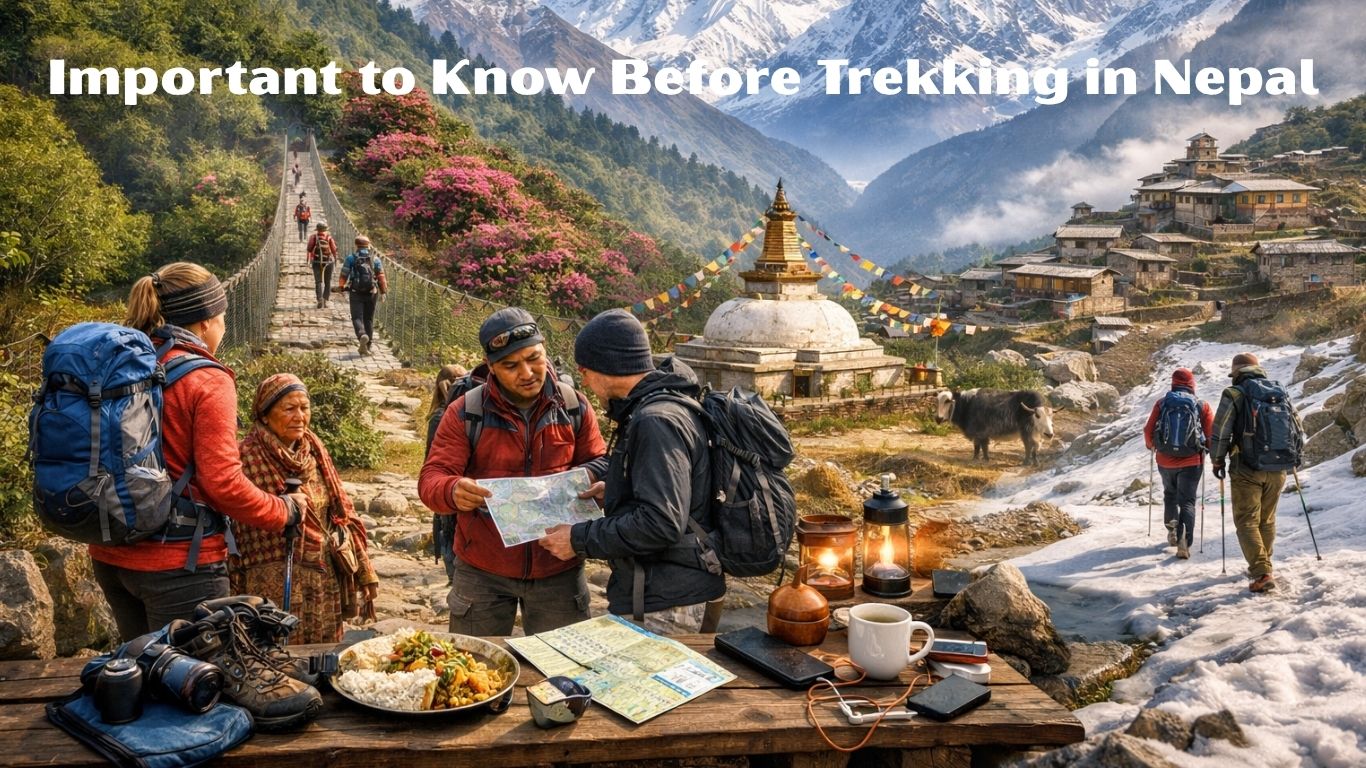
Important Things to Know Before Trekking in Nepal
26/03/2026
Trekking in Nepal gives you more than mountain views. It
lets you walk through quiet villages, cross hanging bridges, meet local people,
and experience landscapes that change every few hours. One day you may walk
through forests, and the next day you may stand in front of snow-covered peaks.
However, a good trek depends on preparation. Many trekkers
focus only on choosing a destination, but small decisions before and during the
trek often shape the whole journey. The right season, proper gear, pace, and
local awareness all matter. This guide explains practical trekking tips that
help beginners and experienced trekkers enjoy Nepal more safely and
comfortably.
Choose the Right Trek Before You Arrive
Not every trek in Nepal fits every traveler. Some routes
need strong endurance, while others suit first-time hikers.
For example, Annapurna Base Camp works well for many
beginners because the route has regular tea houses and steady trail conditions.
In contrast, Everest Base Camp demands more stamina because of altitude
and longer walking days.
Before booking, think about:
- Total
trekking days
- Maximum
altitude
- Daily
walking hours
- Weather
conditions
- Available
facilities
When you choose according to your fitness level, the trek
becomes more enjoyable.
Trek in the Best Season for a Better Experience
Season affects every part of trekking in Nepal. Trails,
mountain visibility, temperature, and flight reliability all change throughout
the year.
Spring Season
Spring usually runs from March to May. Rhododendron forests
bloom, temperatures stay moderate, and mountain views often remain clear.
Autumn Season
Autumn, from September to November, remains the most popular
trekking period because skies usually stay stable after the monsoon. These
seasons often give better trail conditions and safer walking days.
Winter trekking is possible too, but higher regions become
much colder. Monsoon trekking can also work in selected rain-shadow areas,
although leeches and slippery trails appear in many regions.
Prepare Your Body Before the Trek
A mountain trek becomes easier when your body already knows
long walking. You do not need advanced gym training, but simple preparation
helps a lot. Start at least two weeks before your trip:
- Walk
daily for 45 minutes
- Use
stairs regularly
- Carry
a light backpack while walking
- Improve
breathing through steady uphill walking
This helps your legs and lungs adjust better once you start
trekking.
Pack Light but Pack Smart
Many trekkers carry too much and regret it on the first
uphill climb. A lighter backpack saves energy every day.
Important items to carry
- Waterproof
trekking shoes
- Warm
layers
- Light
down jacket
- Gloves
and a cap
- Sunscreen
- Sunglasses
- Water
bottle
- Headlamp
- Power
bank
- Basic
medicine
Weather changes fast in Nepal, especially above 3,000
meters. Therefore, layering clothes works better than carrying thick heavy
clothing.
Walk Slowly at High Altitude
Altitude changes how your body performs. Even fit trekkers
can feel tired above 3,000 meters. The best habit is simple: walk slowly.
Many people make the mistake of rushing during the first
days. Slow movement helps your body adjust naturally.
Signs you should never ignore
- Headache
- Nausea
- Dizziness
- Loss
of appetite
- Difficulty
sleeping
If symptoms increase, resting becomes more important than
continuing upward.
Drink More Water Than You Think You Need
Cold weather often hides thirst, yet your body still loses
water. Drink water regularly throughout the day, even if you do not feel
thirsty.
Warm fluids also help. Tea, soup, and hot lemon drinks are
common in trekking lodges. At the same time, avoid too much alcohol at higher
elevations because it slows acclimatization.
Start Trekking Early Each Morning
Morning usually gives the best trail conditions. You often
get:
- Better
mountain views
- Less
wind
- Easier
river crossings
- More
daylight for rest
Starting early also helps you reach your tea house before
afternoon clouds or sudden weather changes.
Eat Simple Food for Better Energy
Food in trekking regions stays simple, but it works well for
long walking days. Dal bhat remains the top choice because it gives balanced
energy through rice, lentils, vegetables, and pickles. Many trekkers also
choose:
- Noodles
- Soup
- Potatoes
- Eggs
- Pancakes
Heavy oily food often feels uncomfortable at altitude, so
simple meals usually work better.
Respect Local Culture on the Trail
Trekking in Nepal also means entering local communities.
Many routes pass through villages where traditions remain
strong.
A few simple habits help:
- Greet
people politely
- Ask
before taking photos
- Walk
respectfully near monasteries
- Follow
local customs in villages
This creates better interactions and often leads to warm
conversations with local people.
Keep Enough Cash with You During the Trek
Remote trekking areas often do not have ATM access. Even
where small digital payment options exist, internet problems happen often.
Carry enough local currency before entering the trekking
route. You may need cash for:
- Charging
devices
- Hot
showers
- Snacks
- Wi-Fi
- Small
purchases
Hire a Guide for Better Safety and Local Knowledge
A guide does more than show direction. So hiring an experienced and licensed guide should be better. A good guide helps
with:
- Route
decisions
- Weather
judgment
- Altitude
monitoring
- Local
communication
This becomes especially useful on longer routes or less
crowded trails. For many trekkers, a guide also makes the journey less
stressful because daily logistics become easier.
Stay Flexible Because Mountain Conditions Change Fast
Even perfect plans can shift in Nepal. Flights delay.
Weather changes. Trails close temporarily. Flexible thinking helps more than
strict scheduling.
Adding one spare day often protects your overall trip,
especially if you trek in high regions.
Popular Trekking Areas That Need Good Preparation
Several famous routes attract global trekkers every year. Popular
choices include:
- Langtang Valley
- Manaslu Circuit
- Mardi Himal
- Everest Base Camp
- Annapurna Circuit
- North Annapurna Base Camp
Each route offers different altitudes, cultures, and walking
styles. Because of that, your preparation should always match the specific
route.
A successful trek in Nepal often depends on simple habits rather than expensive gear. Walk steadily, drink enough water, listen to your body, and stay open to local experiences.
Frequently Asked Questions (FAQs)
Q: What is the best month for trekking in Nepal?
A: October often gives very clear skies, but both spring and autumn work very well.
Q: Can beginners trek in Nepal?
A: Yes, beginners can choose moderate routes like Mardi Himal or lower Annapurna Base Camp sections.
Q: How much cash should trekkers carry?
A: It depends on route length, but carrying enough for food, charging, showers, and extra days is always wise.
Q: Is altitude sickness common in Nepal?
A: Yes, especially above 3,000 meters, so slow ascent and hydration matter a lot.