
Table of Contents
- Can You Trek Solo in Nepal in 2026?
- Why Did Nepal Introduce New Trekking Rules?
- Which Trekking Regions Require a Licensed Guide?
- Are There Any Exceptions?
- Benefits of Hiring a Licensed Trekking Guide
- What Permits Do You Need for Trekking in Nepal?
- Best Treks for Travelers Who Prefer Independent Adventures
- Safety Tips Before Trekking in Nepal
- Best Time to Trek in Nepal
- Conclusion
- Frequently Asked Questions (FAQs)
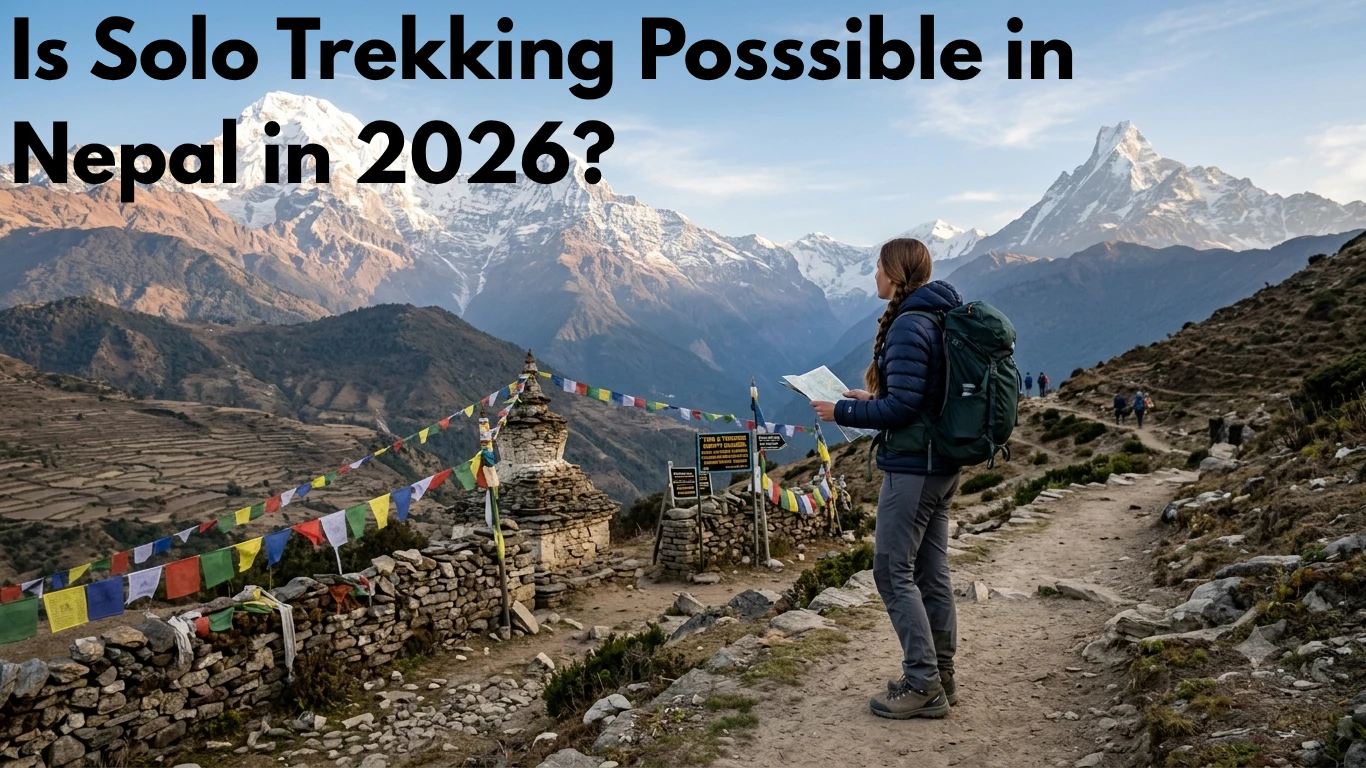
Is Solo Trekking Allowed in Nepal in 2026? Latest Rules, Guide Requirements, and Everything
26/06/2026
Nepal is one of the most popular trekking destinations in
the world. Every year, thousands of adventure travelers visit Nepal to explore
famous trails like Everest Base Camp, Annapurna Base Camp, Langtang Valley, and
the Manaslu Circuit.
If you are planning your first Himalayan adventure, you may
be asking one important question: Is solo trekking allowed in Nepal in 2026?
The answer is yes, but it depends on where you plan to
trek.
Many websites still share outdated information, which often creates confusion for international travelers. While some trekking routes require a licensed guide, others follow different permit systems and local regulations. Understanding these rules before planning your trip can save you time, money, and unexpected problems on the trail.
Can You Trek Solo in Nepal in 2026?
Yes, solo trekking is still possible in Nepal in 2026.
However, it is not permitted on every trekking route.
Over the past few years, Nepal introduced new trekking
regulations to improve visitor safety, reduce rescue incidents, and support
licensed local guides. Because of these changes, many of the country's most
popular trekking destinations now require foreign trekkers to travel with a
licensed guide.
Instead of asking whether solo trekking is completely
banned, it is more accurate to ask:
Which trekking regions require a guide, and where is
independent trekking still possible?
The answer depends on the trekking destination and the
permit system that manages that region.
Why Did Nepal Introduce New Trekking Rules?
Nepal's trekking trails pass through remote mountain
valleys, high-altitude passes, glaciers, and isolated villages where emergency
services are often limited.
Every year, rescue teams respond to cases involving:
- Trekkers
getting lost
- Altitude
sickness
- Severe
weather conditions
- Medical
emergencies
- Communication
problems in remote areas
To improve safety, trekking authorities introduced stricter
regulations that encourage or require international trekkers to hire licensed
guides.
These changes also help:
- Improve
emergency response
- Promote
responsible tourism
- Create
employment for local guides
- Protect
visitors in remote mountain regions
- Improve
the overall trekking experience
Which Trekking Regions Require a Licensed Guide?
The rules vary by trekking region. Some areas require a
licensed guide, while others have different permit systems that may still allow
independent trekking.
1.
Everest Region
Popular treks include:
·
Everest Base Camp Trek
·
Gokyo Lakes Trek
·
Everest Three Passes Trek
Although permit requirements differ
from some other regions, many travelers choose a licensed guide for safety,
navigation, and local expertise.
2.
Annapurna Region
The Annapurna region includes some
of Nepal's most famous trekking routes, including:
·
Annapurna Base Camp Trek
·
Annapurna Circuit Trek
·
Mardi Himal Trek
·
Ghorepani Poon Hill Trek
Current trekking regulations should
always be checked before your trip, as permit policies may change.
3.
Manaslu Circuit Trek
The Manaslu Circuit has always
followed stricter regulations because it is a restricted area.
Trekkers must:
·
Travel with a licensed guide
·
Obtain restricted area permits
·
Book through a registered trekking agency
Independent trekking is not
permitted here.
4.
Kanchenjunga Region
Kanchenjunga is another restricted
trekking destination. International trekkers must travel with a licensed guide
and obtain the required permits before entering the region.
Are There Any Exceptions?
Yes. Not every trekking destination follows the same rules.
Some trekking areas operate under local permit systems
rather than the TIMS system. Because regulations continue to evolve, travelers
should always verify the latest requirements before booking flights or trekking
permits.
The safest approach is to confirm the current rules with a
licensed trekking company before your trip.
Benefits of Hiring a Licensed Trekking Guide
Although many travelers dream of trekking completely alone,
hiring a licensed guide often makes the experience safer and more enjoyable.
· Better
Safety: Guides know how to respond to altitude sickness, changing weather,
and unexpected trail conditions.
· Local
Knowledge: They share the history, culture, traditions, and stories of the
Himalayan communities you visit.
· Easier
Navigation: Mountain trails are not always clearly marked. A guide helps
you stay on the correct route.
· Emergency
Support: If you become ill or injured, a guide can arrange transportation,
communicate with rescue teams, and provide immediate assistance.
· Stress-Free
Travel: Guides help organize accommodation, permits, transportation, and
daily logistics so you can focus on enjoying your trek.
What Permits Do You Need for Trekking in Nepal?
Permit requirements depend on your trekking destination.
Common permits include:
- National
Park Entry Permit
- Conservation
Area Permit
- Restricted
Area Permit
- Local
Municipality Permit
- TIMS
Card where applicable
Because permit requirements can change, always check the
latest regulations before starting your trek.
Best Treks for Travelers Who Prefer Independent Adventures
If you enjoy the freedom of solo travel but also want the
support of a local expert, these treks are excellent choices.
· Everest
Base Camp Trek: Nepal's most iconic trek, offering breathtaking views of
Mount Everest, Sherpa villages, and unforgettable Himalayan landscapes.
· Annapurna
Base Camp Trek: A perfect combination of mountain scenery, traditional
villages, forests, and diverse landscapes.
· Langtang
Valley Trek: Ideal for travelers looking for fewer crowds while enjoying
spectacular mountain views and authentic Tamang culture.
· Mardi
Himal Trek: A shorter trek with incredible panoramic views, making it
perfect for first-time visitors.
· Gokyo
Lakes Trek: A quieter alternative to Everest Base Camp, famous for its
turquoise lakes and panoramic Himalayan viewpoints.
Safety Tips Before Trekking in Nepal
Before beginning your trek, keep these important safety tips
in mind.
- Allow
enough time for acclimatization.
- Purchase
travel insurance that covers helicopter evacuation.
- Pack
proper trekking clothing and equipment.
- Carry
enough cash for remote villages.
- Download
offline maps before your trek.
- Stay
updated on weather forecasts.
- Drink
plenty of water throughout your trek.
- Respect
local customs and traditions.
Best Time to Trek in Nepal
Spring (March to May): Spring offers comfortable
temperatures, blooming rhododendron forests, and excellent mountain views.
Autumn (September to November): Autumn is the most
popular trekking season because of its stable weather and clear skies.
Winter (December to February): Winter provides
quieter trails but colder temperatures, especially at higher elevations.
Monsoon (June to August): Heavy rainfall affects many
trekking routes, although rain-shadow regions remain good options.
Conclusion
So, is solo trekking allowed in Nepal in 2026?
Yes, but the answer depends on your chosen trekking
destination. While some regions still allow independent trekking under specific
regulations, many of Nepal's most popular routes now require or strongly
recommend trekking with a licensed guide.
Rather than limiting your experience, these regulations help
create a safer and more enjoyable adventure. With the support of an experienced
local guide, you can focus on exploring Nepal's breathtaking landscapes,
learning about local culture, and creating unforgettable memories in the
Himalayas.
Frequently Asked Questions (FAQs)
Q: Is solo trekking completely banned in Nepal?
A: No. Solo trekking is not completely banned. The rules depend on the trekking region and its permit requirements.
Q: Which trekking region does not allow independent trekking?
A: Restricted areas such as the Manaslu Circuit and Kanchenjunga require trekkers to travel with a licensed guide.
Q: Do I need a guide for Everest Base Camp?
A: Requirements may vary depending on current regulations and local permit systems. It is always best to verify the latest rules before planning your trek.
Q: Is Nepal safe for solo travelers?
A: Yes. Nepal is considered one of the safest trekking destinations in the world. Following local regulations and trekking with experienced guides where required makes the journey even safer.