
Table of Contents
- The Everest dream vs the Everest reality
- What the Everest View Trek actually includes
- Seeing Everest without extreme effort
- The cultural experience feels deeper, not rushed.
- Physical comfort matters more than people admit
- Best Time to Trek, budget, and accessibility
- Is it less of an achievement?
- Who should choose the Everest View Trek?
- Everest is More Than a Finish Line
- Frequently Asked Questions (FAQs)
Is the Everest View Trek Worth It If You Don’t Reach Base Camp?
01/01/2026
For many trekkers and travelers, the word Everest immediately brings one image to mind: Everest Base Camp. It has become the symbol of trekking in Nepal, almost like a final stamp of achievement for almost every trekker all over the world. People talk about it as if seeing Everest only “counts” if you reach that rocky campsite at 5,364 meters.
So when someone hears about the Everest View Trek, the doubt naturally creeps in.
If I don’t reach Base Camp, am I really experiencing Everest?
Will it feel incomplete?
Am I taking the easy way out?
These are honest questions that really come to a trekker's mind. And the best way to answer them is not with a quick yes or no, but by looking at what trekking in the Everest region is really about.
The Everest dream vs the Everest reality
Before setting foot on the trail, most people imagine the Everest trek as one long, dramatic climb toward a single goal. In reality, the journey is made of hundreds of small moments. The sound of boots on stone steps. Prayer flags fluttering above mani walls (long, sacred walls in the Himalayan Buddhist regions made of stones carved with prayers). The smell of wood smoke drifts out of teahouses at dusk.
Everest Base Camp is just one location in a vast, living landscape. It’s not a viewpoint, not a quiet place, and not even visible from most of the camp itself. Yet, because it carries a famous name, many people believe it’s the only meaningful destination.
The Everest View Trek challenges that idea completely.
What the Everest View Trek actually includes
The Everest View Trek usually takes around 5 to 7 days and focuses on the lower Khumbu region. It starts the same way as the Base Camp trek, with a thrilling flight to Lukla and a walk along the Dudh Koshi River.
From the very beginning, the trail feels alive. You pass through small villages, cross long suspension bridges decorated with prayer flags, and slowly gain altitude through pine and rhododendron forests.
The climb to Namche Bazaar is often the first emotional moment. This is the heart of the Khumbu region, a place where trekkers, locals, and yaks all meet. Instead of rushing through, the Everest View Trek allows time to rest here, explore the market, visit bakeries, and adjust to the altitude properly.
Above Namche, the trail opens up. This is where the name “Everest View” truly makes sense.
Seeing Everest without extreme effort
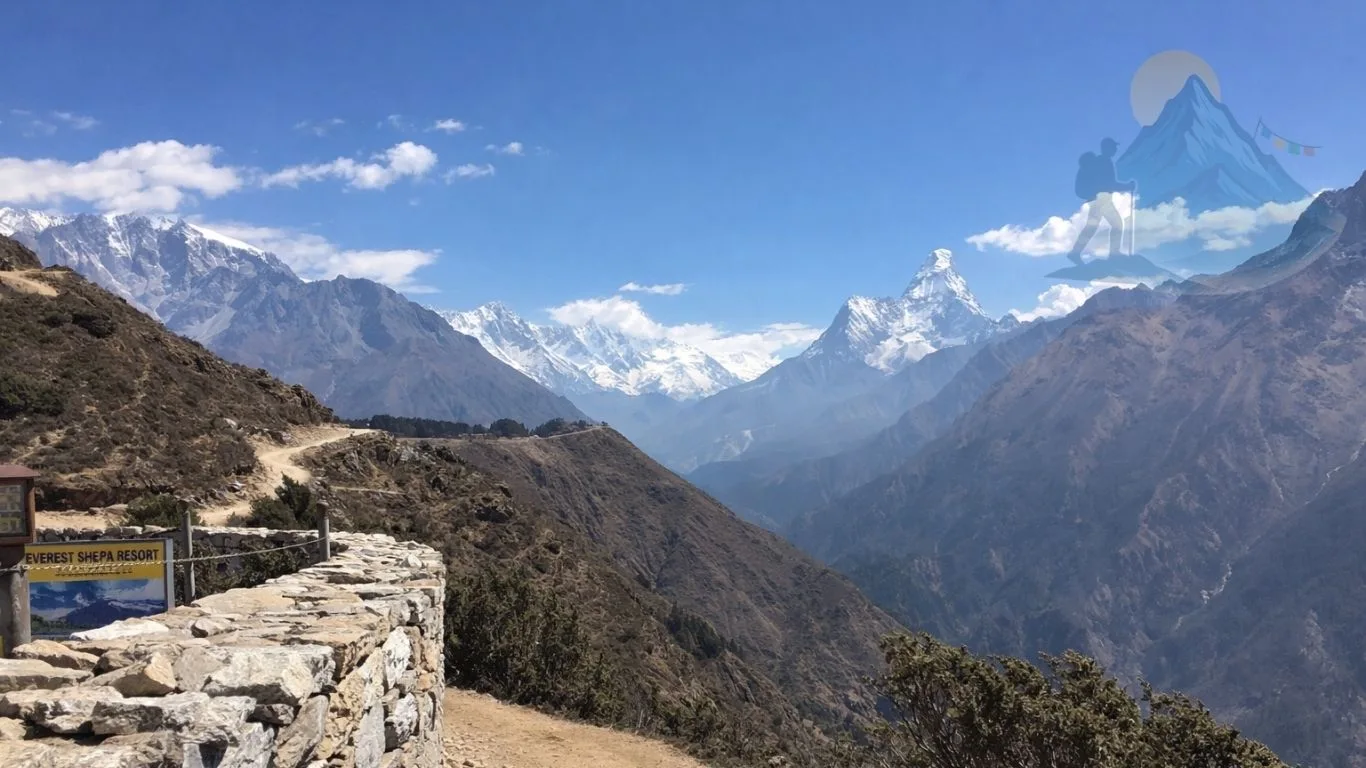
One of the biggest surprises for many trekkers is how early you can see Mount Everest. From viewpoints near Namche Bazaar and especially from Hotel Everest View, the mountain reveals itself in a calm, almost gentle way.
Early in the morning, as the sun rises behind the peaks, Everest stands tall among Lhotse, Nuptse, and Ama Dablam. There’s no rush to take a photo and move on. You can sit, sip tea, and simply watch.
For many people, this moment feels more powerful than reaching Base Camp. There’s no exhaustion clouding the experience. No headache from thin air. Just clarity and awe.
And yes, the view is real. You see Everest with your own eyes, not as a general idea, but as a massive presence dominating the horizon.
The cultural experience feels deeper, not rushed.
Another reason the Everest View Trek is worth it lies in how it allows you to connect with the region.
When trekking to Base Camp, the schedule can feel tight. Each day has a target village. Rest days are limited. Conversations are short because everyone is focused on reaching the next stop.
On the Everest View Trek, the pace is slower. You spend more time in Sherpa villages like Khumjung and Khunde. You visit monasteries where monks chant in the early morning. You learn about the Sherpa relationship with the mountains, which is deeply spiritual, not competitive.
Everest, for the local people, is not something to conquer. It is sacred. Staying in the lower region gives you space to understand that perspective, instead of just passing through it.
Physical comfort matters more than people admit
There is a certain pride associated with suffering in the mountains. Long days, freezing nights, loss of appetite, and altitude headaches are often worn like badges of honor.
But not everyone wants that experience. And more importantly, not everyone needs it to enjoy the Himalayas.
The Everest View Trek stays at a lower altitude, which means:
• Lower risk of altitude sickness
• Better sleep at night
• More energy during the day
• A more relaxed overall journey
This makes a huge difference, especially for first-time trekkers, families, or older travelers. Instead of constantly checking how your body feels, you can focus on where you are.
Many trekkers return saying they felt strong, present, and genuinely happy throughout the trip, something that’s not always true at higher elevations.
Best Time to Trek, budget, and accessibility
Let’s talk practically for a moment. Not everyone has two weeks to spend on a trek. Not everyone wants to commit to the physical and mental demands of Everest Base Camp. And not everyone wants to spend a larger budget on permits, guides, and logistics.
The Everest View Trek is:
• Shorter in duration
• More affordable
• Easier to fit into a tight travel schedule
For people visiting Nepal for the first time, it offers a perfect introduction to high mountain trekking without overwhelming them. Many who do the Everest View Trek later return for longer treks, better prepared and more confident.
When it comes to timing, spring (March to May) and autumn (September to November) are the best seasons. These months offer stable weather, clear mountain views, and comfortable temperatures. Winter (December to February) can also be a good option for those who don’t mind colder mornings, as the lower altitude keeps the trek manageable, and views are often very clear. Monsoon season (June to August) is less ideal due to rain and clouds, but it is still possible for flexible travelers.
Is it less of an achievement?
This is the question that quietly sits behind all the others.
Some people worry that if they don’t reach Base Camp, the trek won’t feel “complete” or impressive enough to talk about. But achievement depends entirely on intention.
If your goal is to test your limits, Base Camp might be the right choice.
If your goal is to experience Everest in a meaningful, memorable way, the Everest View Trek delivers that fully.
In fact, many seasoned trekkers say the pressure to “reach something” often distracts from the beauty of the journey. Removing that pressure can actually make the experience richer.
Who should choose the Everest View Trek?
The Everest View Trek is especially worth it if you:
• Want to see Everest without extreme altitude
• Value comfort and safety
• Enjoy cultural experiences
• Prefer a relaxed pace
• Trekking in Nepal for the first time
It’s not a second-best option. It’s a different style of trekking, designed for people who want connection over conquest.
Everest is More Than a Finish Line
A single campsite can't define Everest's beauty. It lives in the valleys, the villages, the early mornings, and the quiet moments when the clouds lift. The Everest View Trek reminds you of something important: you don’t have to suffer to experience something profound.
So, is the Everest View Trek worth it if you don’t reach Base Camp?
Yes, without any question. Because sometimes, the most powerful experiences happen not at the end of the trail, but right where you finally stop rushing and start looking around. And in the shadow of Everest, that might be the most meaningful journey of all.
If you need help selecting the ideal itinerary, I can tailor one to your specific dates and treks, taking into account your fitness level. I run Nepal Boundary Trekking Agency Pvt. Ltd. and have guided over 1,000 clients from around the world in my 12+ years of guiding and trekking experience. We offer custom trek plans, handle permits and logistics, and pair you with experienced local guides and porters so you can focus on the mountains and the views. You can contact us at Nepal Boundary Trekking Agency Pvt. Ltd. for booking a trek.
Frequently Asked Questions (FAQs)
Q: Is the Everest View Trek suitable for beginners?
A: Yes, the Everest View Trek is one of the best options for beginners. The trail is well-marked, walking days are moderate, and the altitude is much lower than Everest Base Camp, reducing the risk of altitude sickness.
Q: Do you actually see Mount Everest on the Everest View Trek?
A: Yes. You can see Mount Everest clearly from viewpoints near Namche Bazaar and from Hotel Everest View, especially on clear mornings.
Q: How high does the Everest View Trek go?
A: The highest point of the Everest View Trek is usually around 3,880 meters at Hotel Everest View. This is significantly lower than Everest Base Camp, which sits at 5,364 meters.
Q: How many days does the Everest View Trek take?
A: Most Everest View Treks take 5 to 7 days, depending on your pace and itinerary.
Q: Is altitude sickness a concern on the Everest View Trek?
A: Altitude sickness is much less common on this trek because it stays below extreme elevations. Proper acclimatization and a slow pace make it even safer.
Q: What is the best time to do the Everest View Trek?
A: The best time is spring (March to May) and autumn (September to November) for clear views and stable weather. Winter is also possible for those comfortable with cold temperatures.
Q: How difficult is the Everest View Trek?
A: The trek is considered easy to moderate. It involves uphill sections and stone steps but does not require technical climbing or advanced trekking experience.
Q: Is the Everest View Trek worth it if I don’t reach Base Camp?
A: Yes. Many trekkers find it more enjoyable because you still get stunning Everest views, cultural experiences, and a relaxed pace without extreme altitude stress.
Q: What kind of accommodation can I expect?
A: You’ll stay in local teahouses with basic but comfortable rooms. Most offer hot meals, shared bathrooms, and warm dining areas.
Q: Can older travelers or families do this trek?
A: Absolutely. With proper planning, the Everest View Trek is suitable for older travelers and families with trekking experience.