
Table of Contents
- What Makes Langtang Valley Trek Special?
- A Trek Through Changing Himalayan Landscapes
- A Close Look at the Langtang Himalayas
- Langtang Is Surprisingly Close to Kathmandu
- From Kathmandu to Syabrubesi
- Experience Tamang Culture Along the Trail
- Visit Kyanjin Gompa
- Discover Traditional Langtang Villages
- See Glaciers, Waterfalls, and Himalayan Rivers
- Climb Tserko Ri for Panoramic Mountain Views
- Explore Langtang National Park
- Langtang Valley Trek Offers a Quieter Himalayan Experience
- The Trek Is Suitable for Different Types of Travelers
- Is Langtang Valley Trek Suitable for Beginners?
- What Is the Best Time for Langtang Valley Trek?
- Spring
- Autumn
- Winter
- Monsoon
- What Makes Langtang Valley Trek Different From Other Nepal Treks?
- What You Can Expect From a Typical Langtang Valley Trek
- Kathmandu to Syabrubesi
- Syabrubesi to Lama Hotel
- Lama Hotel to Langtang Village
- Langtang Village to Kyanjin Gompa
- Explore Kyanjin
- Return Through the Valley
- Practical Things to Know Before Trekking Langtang Valley
- Langtang Valley Trek Difficulty
- Permits You Need
- Accommodation
- Food and Drinking Water
- Internet, Electricity, and Mobile Network
- What to Pack for Langtang Valley Trek
- How Many Days Do You Need for Langtang Valley Trek?
- How Much Does Langtang Valley Trek Cost?
- Responsible Trekking in Langtang
- Why Langtang Valley Belongs on Your Nepal Trekking Bucket List
- Frequently Asked Questions (FAQs)
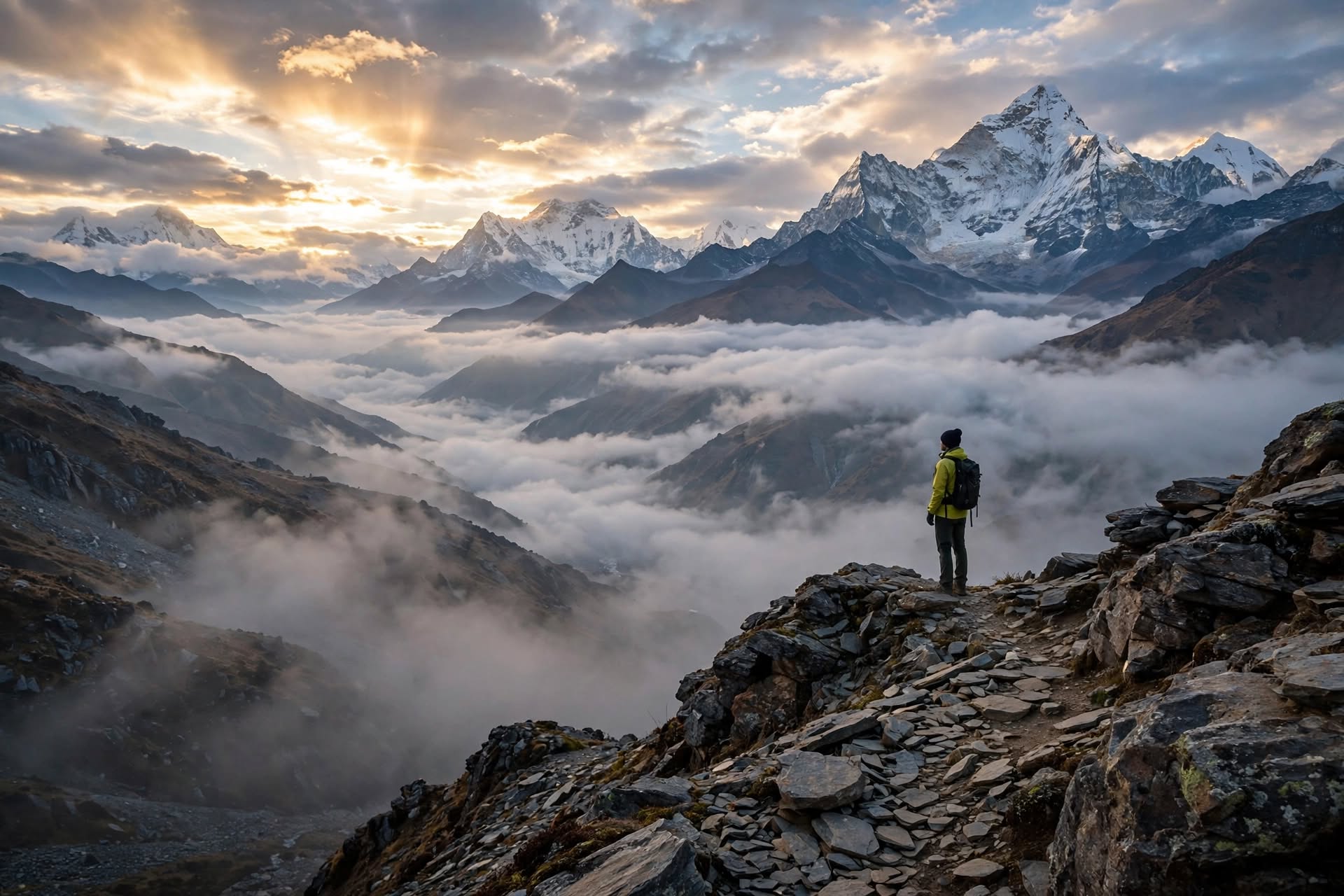
Why Langtang Valley Trek Should Be on Your Nepal Trekking Bucket List
17/09/2026
Nepal has no shortage of famous trekking routes, but you do
not always need weeks on the trail to experience the Himalayas. The Langtang
Valley Trek offers a compact Himalayan journey with high mountains,
glaciers, forests, Buddhist culture, traditional villages, and dramatic alpine
scenery.
The trail leads into Langtang National Park, one of
Nepal's important protected areas. The park stretches across parts of Rasuwa,
Nuwakot, and Sindhupalchok and protects landscapes ranging from subtropical
forests to alpine environments.
What makes Langtang particularly appealing is the variety
packed into a relatively short trekking route. You can leave Kathmandu, travel
toward the trailhead, walk through forests and mountain villages, reach Kyanjin
Gompa, and spend time surrounded by some of the region's most impressive
Himalayan peaks.
Here are the reasons this trek deserves a place on your
Nepal trekking bucket list.
What Makes Langtang Valley Trek Special?
Langtang is not just a mountain walk. It brings together
several experiences that travelers often look for in Nepal.
You can walk beside a mountain river in the lower valley,
pass through rhododendron and bamboo forests, visit traditional Tamang
settlements, see Buddhist prayer flags and mani walls, and eventually reach a
high alpine landscape surrounded by glaciers and snow-covered peaks.
The Nepal Tourism Board lists trekking, mountaineering, and
experiencing Tamang culture among the main activities in Langtang National
Park. It also identifies glaciers, Himalayan peaks, diverse vegetation, and
wildlife as important features of the area.
That combination gives the trek a strong sense of
progression. The scenery changes as you climb, and so does the atmosphere.
A Trek Through Changing Himalayan Landscapes
The lower section of the route feels green and forested. As
you gain altitude, the vegetation becomes thinner and the mountains become more
dominant.
Along the way, you may encounter:
- Dense
forests
- Bamboo
and rhododendron vegetation
- Mountain
streams and waterfalls
- Traditional
villages
- Open
alpine meadows
- Glacial
landscapes
- Snow-covered
Himalayan peaks
This changing landscape keeps the walk interesting. You are
not looking at the same scenery every day.
A Close Look at the Langtang Himalayas
The Langtang region is home to impressive Himalayan peaks,
including Langtang Lirung, which rises to 7,234 metres. The mountains
become increasingly prominent as you approach the upper valley.
Near Kyanjin Gompa, the valley opens into a dramatic
high-altitude landscape where mountains, glaciers, rocky slopes, and alpine
terrain come together.
For photographers, the route offers plenty of variety. For
trekkers, it provides a chance to see the Himalayas from changing viewpoints
rather than from a single famous lookout.
Langtang Is Surprisingly Close to Kathmandu
One of the biggest practical advantages of the Langtang
region is its accessibility.
The Nepal Tourism Board describes Langtang as one of Nepal's
more accessible Himalayan trekking areas because of its proximity to Kathmandu.
Road access reaches the Langtang region through places such as Dhunche and
Syabrubesi.
That matters if you have limited time in Nepal.
Instead of spending several days just reaching a remote
trekking region, you can travel by road toward the Langtang trailhead and begin
your trek relatively soon after leaving Kathmandu.
From Kathmandu to Syabrubesi
Many Langtang Valley itineraries begin around Syabrubesi.
The road journey is part of the experience. It takes you
away from the Kathmandu Valley and toward the hills and mountains of northern
Nepal.
Road conditions can affect travel time, so it is better to
leave some flexibility in your itinerary rather than planning a tight
connection on the same day.
The Nepal Tourism Board's published Langtang information
also notes that bus travel from Kathmandu to Syabrubesi can take several hours
depending on road conditions.
Experience Tamang Culture Along the Trail
The mountains are only one part of the Langtang experience.
The region has strong connections with Tamang culture and
Tibetan Buddhist traditions. Villages along the route provide opportunities
to see local architecture, Buddhist symbols, prayer flags, mani walls,
monasteries, and traditional ways of life.
The Nepal Tourism Board specifically highlights Tamang
culture as one of the major attractions of Langtang National Park.
For many trekkers, these cultural encounters make the
journey more meaningful.
Instead of simply walking from one mountain viewpoint to
another, you move through communities where people live, work, farm, raise
livestock, and welcome visitors.
Visit Kyanjin Gompa
Kyanjin Gompa is one of the best-known destinations
in the upper Langtang Valley.
The settlement sits at around 3,800 metres and provides a
base for exploring the surrounding high-altitude landscape. The Nepal Tourism
Board identifies Kyanjin as an important destination where visitors can
continue exploring the upper valley.
The area around Kyanjin offers:
- Mountain
views
- Buddhist
cultural sites
- Glacial
scenery
- High-altitude
walking
- Day
hikes
- Views
toward surrounding peaks
It is also a useful place to slow down. Rather than rushing
through the valley, spending an extra day here gives you time to explore.
Discover Traditional Langtang Villages
The villages along the route help you understand the region
beyond its scenery.
You may see stone houses, prayer flags, livestock,
agricultural activity, and small teahouses serving trekkers.
The Tamang Heritage Trail also connects several traditional
communities in the wider Langtang region, showing how closely trekking and
local culture are linked in northern Nepal.
When visiting these villages, simple things matter. Ask
before photographing people, respect religious spaces, and remember that the
trail passes through communities rather than an open-air museum.
See Glaciers, Waterfalls, and Himalayan Rivers
The Langtang Valley changes dramatically as you gain
elevation.
Lower sections feature forests and river valleys. Higher
sections become increasingly open, rocky, and alpine.
The Nepal Tourism Board identifies glaciers, scenic
lakes, Himalayan peaks, forests, and alpine vegetation among the natural
features of Langtang National Park.
The Langtang River also remains a major geographical feature
of the valley. Walking beside mountain streams and crossing bridges adds
another dimension to the trek.
Higher in the valley, the landscape becomes more rugged.
Glacial terrain and snow-covered mountains remind you how quickly the
environment changes with altitude.
Climb Tserko Ri for Panoramic Mountain Views
If you want to add a challenging day hike to your Langtang
itinerary, Tserko Ri is one of the major options near Kyanjin Gompa.
The viewpoint sits above the settlement and provides wide
views across the surrounding Himalayan landscape.
The climb usually starts early because morning conditions
often provide better visibility. The exact experience depends on weather, snow,
fitness, and trail conditions.
The Nepal Tourism Board also highlights the viewpoint above
Kyanjin as a major attraction for panoramic views of the valley and surrounding
mountains.
Tserko Ri is not something you should treat as a casual
walk. At high altitude, even a relatively short distance can feel demanding.
Take your time, stay hydrated, and pay attention to how your
body responds to the altitude.
Explore Langtang National Park
The Langtang Valley Trek passes through Langtang National
Park, established in 1976. The park covers about 1,710 square kilometres,
with a 420-square-kilometre buffer zone.
The protected area supports a wide range of habitats, from
lower-elevation forests to alpine vegetation.
The Nepal Tourism Board lists wildlife including:
- Red
panda
- Himalayan
black bear
- Himalayan
tahr
- Musk
deer
- Muntjac
- Himalayan
ghoral
- Serow
- Langur
and rhesus monkeys
- Pika
- Snow
leopard
The park also records 373 bird species, including the
Himalayan monal and tragopan.
Do not expect to see a red panda simply because you are
trekking through its habitat. Red pandas are elusive and difficult to spot.
Nepal's Department of National Parks and Wildlife Conservation identifies
Langtang National Park as one of the protected areas where red panda presence
has been confirmed.
For wildlife lovers, the real value lies in knowing that you
are walking through a protected Himalayan ecosystem.
Langtang Valley Trek Offers a Quieter Himalayan Experience
Langtang is a well-known trekking region, so it would be
misleading to describe the trail as completely empty.
Still, the experience can feel different from Nepal's
busiest trekking corridors.
The route combines mountain scenery with villages, forests,
cultural sites, and high-altitude landscapes. That variety means the trek does
not depend on a single famous destination.
It also gives you more opportunities to slow down and
observe the surroundings.
You might spend one morning walking through forest, the
afternoon crossing a mountain settlement, and the following day looking across
an alpine valley.
That change of pace is one of the reasons Langtang works
well for travelers who want a Himalayan experience without committing to a very
long expedition.
The Trek Is Suitable for Different Types of Travelers
Langtang Valley Trek can suit several types of trekkers, but
that does not mean it is easy.
Altitude remains an important consideration. The route
reaches around 3,800 metres at Kyanjin, while optional climbs such as Tserko Ri
take you higher.
Is Langtang Valley Trek Suitable for Beginners?
A reasonably fit beginner can consider Langtang, especially
with a sensible itinerary and proper acclimatization.
You should prepare for:
- Several
hours of walking on trekking days
- Uneven
and sometimes steep trails
- Significant
elevation gain
- Cold
temperatures at higher elevations
- Basic
teahouse accommodation
- Limited
services in remote sections
- The
possibility of altitude-related problems
Fitness helps, but pacing matters just as much.
A common mistake is trying to walk too quickly because the
distance looks manageable on paper. At altitude, a slower pace can make the day
much more comfortable.
What Is the Best Time for Langtang Valley Trek?
The main trekking seasons are spring and autumn.
The Nepal Tourism Board identifies March to May and October
to November as favourable periods for Langtang, while June to September
brings monsoon conditions and December to February can bring snow and colder
conditions at higher elevations.
Spring
Spring brings:
- Warmer
conditions at lower elevations
- Rhododendron
flowers
- Good
trekking conditions in many areas
- Mountain
views when the weather is clear
Autumn
Autumn is popular because it generally brings stable
trekking conditions and good mountain visibility.
October and November are particularly useful months for
travelers who want clearer Himalayan views.
Winter
Winter can transform the upper valley with snow and colder
temperatures.
The scenery can be beautiful, but you need suitable
clothing, equipment, and a more flexible plan.
Monsoon
June to September brings more rain to many parts of Nepal.
Wet trails, clouds, landslides, and road conditions can affect the journey, especially during the approach to the trekking area.
What Makes Langtang Valley Trek Different From Other Nepal Treks?
Every major Himalayan route has its own character. Instead
of asking which trek is "best," it makes more sense to consider what
type of experience you want.
|
Trek |
Main Experience |
|
Langtang Valley Trek |
Himalayan scenery, Tamang culture, glaciers, forests, and
Kyanjin Gompa |
|
Everest Base Camp Trek |
High-altitude journey, Sherpa culture, and views of the
Everest region |
|
Annapurna Base Camp Trek |
Mountain scenery, changing landscapes, and diverse
communities |
|
Manaslu Circuit Trek |
Remote mountain landscapes, high passes, and cultural
diversity |
Langtang stands out for the combination of accessibility,
mountain scenery, cultural experiences, and a relatively compact trekking route.
That makes it particularly interesting for travelers who
want a shorter Himalayan journey while still reaching a high mountain
environment.
What You Can Expect From a Typical Langtang Valley Trek
A standard Langtang journey follows a gradual route toward
Kyanjin Gompa.
The exact itinerary varies between trekking companies and
individual travelers, but the general progression looks like this:
Kathmandu to Syabrubesi
The journey begins with a road trip from Kathmandu toward
the Langtang region.
Syabrubesi to Lama Hotel
The trail enters the forest and follows the river through
increasingly mountainous terrain.
Lama Hotel to Langtang Village
The landscape begins opening up as you gain elevation.
Langtang Village to Kyanjin Gompa
This section takes you deeper into the high valley, with
larger mountain views and alpine scenery.
Nepal Tourism Board's published route information lists
Kyanjin at approximately 3,800 metres.
Explore Kyanjin
Use the extra time to explore the area, visit cultural
sites, and consider a suitable day hike.
Return Through the Valley
The return journey retraces much of the route toward
Syabrubesi before the drive back to Kathmandu.
You can adjust the itinerary by adding acclimatization or
exploration days.
Practical Things to Know Before Trekking Langtang Valley
Langtang Valley Trek Difficulty
The trek is generally considered a moderate Himalayan
trekking route, but difficulty depends on your fitness, itinerary, weather,
trail conditions, and altitude.
Do not judge the trek only by kilometres.
A shorter high-altitude day can feel harder than a longer
walk at lower elevation.
Permits You Need
Langtang lies within a protected national park, so trekkers
need the relevant Langtang National Park entry permit.
TIMS requirements also apply to trekking in Nepal, and
current fees and procedures can change. Nepal Tourism Board currently lists
TIMS charges of NPR 1,000 for SAARC applicants and NPR 2,000 for other
applicants through its online service information.
Before your trek, confirm the latest requirements with the
Nepal Tourism Board, your registered trekking agency, or the relevant official
authority.
Accommodation
Teahouses and lodges serve the main trekking route.
Expect simple accommodation rather than hotel-style
facilities, particularly as you move higher into the valley.
The Nepal Tourism Board confirms that lodges, camping, and
teahouse accommodation are available in the Langtang region.
Food and Drinking Water
Common teahouse meals include:
- Dal
bhat
- Noodles
- Momos
- Soups
- Rice
dishes
- Eggs
- Bread
- Tea
and other hot drinks
Food choices become more limited as you reach higher and
more remote locations.
For water, carry a reusable bottle and use a reliable
purification method or treated drinking water.
Internet, Electricity, and Mobile Network
Connectivity and electricity can vary between villages.
Do not depend entirely on your phone for navigation,
communication, or entertainment.
A power bank is useful, especially if you plan to take
photographs and videos throughout the day.
What to Pack for Langtang Valley Trek
You do not need to carry your entire house into the
Himalayas. A practical packing list should include:
- Comfortable
trekking boots
- Warm
base layers
- Fleece
or insulating layer
- Waterproof
jacket
- Trekking
trousers
- Warm
hat and gloves
- Sunglasses
- Sunscreen
- Reusable
water bottle
- Water
purification tablets or filter
- Headlamp
- Power
bank
- Personal
medication
- Basic
first-aid supplies
- Sleeping
bag suitable for the season
- Passport
and required trekking documents
Pack according to the season. Winter requires more serious
cold-weather preparation than spring or autumn.
How Many Days Do You Need for Langtang Valley Trek?
The trek can be completed in different timeframes depending
on your starting point, walking pace, acclimatization needs, and whether you
include additional hikes.
A rushed itinerary may save time, but it can also reduce
your opportunity to enjoy the valley.
A better approach is to allow enough time for:
- Travel
to the trailhead
- Gradual
altitude gain
- Exploration
around Kyanjin Gompa
- A
possible Tserko Ri hike
- Weather
or transportation delays
The Nepal Tourism Board's route information shows that the
core journey to Kyanjin involves several trekking stages rather than one long
push.
If you have flexibility, an extra day in the upper valley
can make the experience much more relaxed.
How Much Does Langtang Valley Trek Cost?
There is no single fixed cost for every Langtang trek.
Your total budget depends on:
- Number
of trekking days
- Guide
services
- Porter
services
- Transportation
- Accommodation
- Food
- Permits
- Travel
insurance
- Equipment
- Personal
spending
Transportation can also influence the final cost because
road travel is required to reach the main trailhead.
Instead of choosing a trek package based only on its
headline price, check exactly what the package includes.
Look for details about transportation, accommodation, meals,
permits, guide and porter services, insurance responsibilities, and emergency
support.
Responsible Trekking in Langtang
A good trekking experience should also respect the place you
are visiting.
Langtang is a protected natural area and home to local
communities with their own traditions and daily lives.
Follow a few simple principles:
- Carry
your waste until you find an appropriate disposal point.
- Reduce
single-use plastic.
- Stay
on established trails.
- Respect
monasteries, shrines, prayer flags, and mani walls.
- Ask
permission before photographing people.
- Do not
disturb wildlife.
- Support
local teahouses and businesses.
- Use
water responsibly.
- Follow
national park rules.
Small choices matter when thousands of visitors travel
through the same mountain environment.
Why Langtang Valley Belongs on Your Nepal Trekking Bucket List
A good bucket-list trek does not need to be the longest or
highest route.
Langtang offers something more balanced.
You get Himalayan mountain views without spending weeks
reaching the region. You walk through forests before entering a high alpine
valley. You experience Tamang culture and Buddhist traditions. You can explore
Kyanjin Gompa, look toward glaciers and high peaks, and add a challenging
viewpoint such as Tserko Ri.
At the same time, the route passes through Langtang
National Park, where diverse forests and wildlife form an important part of
the landscape.
For travelers with limited time, Langtang offers a practical
way to experience the Himalayas. For experienced trekkers, it provides a
different perspective on Nepal's mountain culture and landscapes.
If Langtang is on your trekking plans, start by choosing the right season and itinerary. Then prepare for altitude, check the current permit requirements, and leave enough time to enjoy Kyanjin rather than treating it as just another overnight stop.
Frequently Asked Questions (FAQs)
Q:
A: