
Table of Contents
- Entry Rules and Practical Logistics
- Access Restrictions and Viewing Areas
- Ticket Costs and Operating Hours
- Hiring a Local Guide
- Observing the Bagmati River Cremations
- What Happens on the Ghats
- Strict Photography Etiquette
- Managing the Emotional Impact
- Dress Code and Temple Behavior
- Required Clothing for Visitors
- Interacting with Sadhus
- Wildlife and Macaques
- Getting There and Nearby Itineraries
- Transportation from Thamel
- The Airport Connection
- Pairing with Boudhanath Stupa
- Frequently Asked Questions (FAQs)
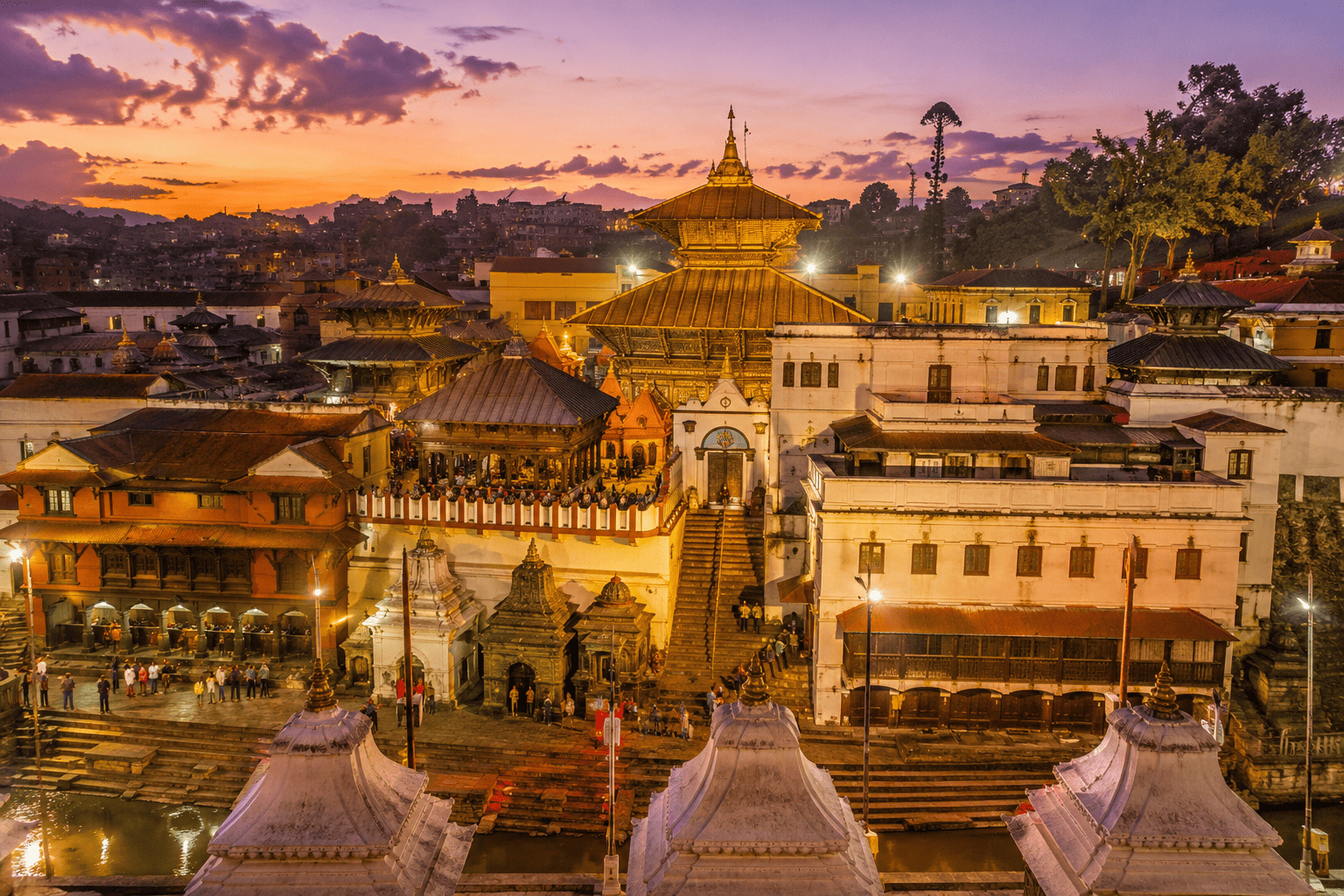
Pashupatinath Temple: Complete Guide for Foreign Visitors
21/08/2026
Pashupatinath is one of the most important Hindu temples in the world, and it's right in Kathmandu, so most visitors end up here at some point. It's also one of the few places in the city where you can watch real Hindu rituals and cremations happening on the riverbank, which can be a lot for first-time visitors if they don't know what to expect going in.
Entry Rules and Practical Logistics
Foreign visitors often feel unsure about access rules when
visiting major Hindu shrines. You need to know exactly where you can walk and
what you must pay before arriving.
Access Restrictions and Viewing Areas
Non-Hindus cannot cross the silver doors into the main
temple building. Temple guards strictly enforce this rule and restrict the
inner sanctum to Hindu devotees only. However, foreign visitors get
unrestricted access to the massive surrounding temple complex. You can walk
along the Bagmati River, explore the terraces, and climb the steps on the
eastern side. The eastern bank offers a clear, elevated view of the main pagoda
roof and the daily activities below.
Ticket Costs and Operating Hours
Foreign visitors must purchase a ticket at the main entrance
kiosk before walking into the complex. The entry fee for foreign nationals
currently stands at 1,000 NPR (approximately $8 USD), while Indian nationals
pay a reduced SAARC rate. Keep this physical ticket on you, as guards check
passes at multiple checkpoints along the riverbank. The complex opens before
sunrise and stays active well past sunset.
Hiring a Local Guide
Dozens of independent guides wait near the ticket counter
offering tours. Hiring a registered guide transforms the experience from a
confusing walk into an educational journey. Always ask to see their official
tourism board license before agreeing to a price. A standard two-hour guided
walk usually costs around 1,500 to 2,000 NPR.
|
Visit Time |
Vibe & Activity |
Best For |
|
Early Morning (6 AM - 9 AM) |
Quiet, locals washing, morning prayers |
Photography, avoiding crowds |
|
Mid-Day (11 AM - 2 PM) |
Hot, bright, active cremations |
Quick stopovers before flights |
|
Evening (5 PM - 7 PM) |
Crowded, chanting, Sandhya Aarti |
Cultural immersion, dramatic lighting |
Observing the Bagmati River Cremations
The cremation ghats along the Bagmati River form the core of
the Pashupatinath experience. This is a real, ongoing part of Hindu tradition
and requires your complete respect.
What Happens on the Ghats
Families bring their deceased loved ones to the stone
platforms lining the river. Priests perform final purification rituals using
the river water before placing the body on the wooden pyres. The eldest son
typically lights the fire, and the family stays until the cremation finishes.
Workers then sweep the remaining ashes directly into the holy Bagmati River.
Strict Photography Etiquette
You can observe these ceremonies from the eastern bank
across the river. You must maintain a respectful distance and avoid loud
conversations. Never point a camera directly at a grieving family or take
close-up photos of the bodies.
"A little sensitivity goes a long way here; keep your
cameras lowered and never use flash photography near the pyres," advises
our lead Kathmandu guide.
Managing the Emotional Impact
Watching open-air cremations challenges many first-time
visitors. The smells, the smoke, and the public displays of grief can feel
overwhelming. Take breaks by walking up into the terraced shrines if the
riverbank becomes too intense.
Dress Code and Temple Behavior
Your behavior and clothing dictate how locals perceive you
within the temple grounds. You must follow standard South Asian temple
etiquette throughout the entire complex.
Required Clothing for Visitors
Both men and women must dress modestly to enter the complex.
- Wear
long pants or skirts that completely cover your knees.
- Choose
shirts with sleeves that cover your shoulders.
- Remove
your hats and sunglasses when speaking to holy men.
- Take
off your shoes immediately when signs indicate restricted holy zones.
Interacting with Sadhus
You will see painted Sadhus (Hindu holy men) sitting along
the eastern pathways. Many of these men are genuine ascetics, but some cater
specifically to tourists. If you take a photograph of a posed Sadhu, they will
aggressively demand a cash tip. Negotiate a small fee of 100 to 200 NPR before
taking their picture.
Wildlife and Macaques
Hundreds of rhesus macaques live inside the temple complex.
These monkeys move fast and aggressively steal food, shiny objects, and plastic
bottles. Keep all your belongings zipped securely inside your daypack. Never
look a monkey directly in the eyes or bare your teeth, as they interpret this
as a challenge.
Getting There and Nearby Itineraries
Pashupatinath sits right in the heart of the Kathmandu
Valley. Smart planning allows you to combine this visit with other major
landmarks.
Transportation from Thamel
The temple is located just a few kilometers east of the
popular Thamel tourist district. A standard taxi ride from Thamel takes 15 to
20 minutes under normal conditions. However, heavy monsoon traffic between July
and August routinely extends this drive to 45 minutes. Negotiate your taxi fare
before getting in, or use a local ride-hailing app like Pathao.
The Airport Connection
Pashupatinath sits directly adjacent to Tribhuvan
International Airport. The drive takes less than five minutes from the domestic
terminal. Many visitors book a taxi to stop here right after landing or just
before their departing flight out of Nepal.
Pairing with Boudhanath Stupa
Boudhanath Stupa sits just 3.5 kilometers north of
Pashupatinath, making it the perfect pairing for a half-day Kathmandu
itinerary. You can catch a taxi between the two sites for around 300 NPR, or
walk the quiet local path past the Guhyeshwari Temple. Many independent
travelers walk this specific back-alley route to completely avoid the heavy
main road traffic. Combining these two UNESCO World Heritage sites lets you
experience both the Hindu and Tibetan Buddhist epicenters of Nepal in a single
afternoon.
Boudhanath stands as one of the largest spherical stupas in
the world. Thousands of Tibetan pilgrims spin brass prayer wheels here every
day while chanting beneath the painted eyes of the Buddha. Foreigners must pay
a 400 NPR entry fee at the main plaza gate. Once you step inside the circular
courtyard, you must always walk clockwise around the white dome to follow the
traditional kora (circumambulation) route.
Schedule your Boudhanath visit for mid-afternoon before heading down to Pashupatinath for the sunset rituals. The late afternoon light hits the white dome and prayer flags perfectly for photography. Grab a plate of authentic Tibetan momos and butter tea at one of the rooftop restaurants overlooking the main square. This meal gives you a quiet resting point between the busy energy of Boudhanath and the intense, emotional reality of the Pashupatinath cremations.
Contact us at Nepal Boundary Trekking Agency Pvt. Ltd. for local guiding team to book your fully arranged Kathmandu cultural tour today.
Frequently Asked Questions (FAQs)
Q: Can foreigners go inside Pashupatinath Temple?
A: No, the main temple is restricted to Hindus only. Foreign visitors can view it from across the river and explore the wider temple complex.
Q: Is there an entry fee for foreigners?
A: Yes, foreign visitors pay an entry fee at the gate. Prices change periodically, so it's best to confirm the current rate on arrival.
Q: Is it okay to watch the cremations?
A: Yes, observing respectfully from a distance is accepted. Avoid close-up photos of the ceremonies or grieving families.
Q: What should I wear to Pashupatinath?
A: Modest clothing - shoulders and knees covered - is recommended, as it's an active religious site.
Q: How much time should I set aside for a visit?
A: An hour or two is usually enough, longer if you want to catch the evening aarti ceremony on the ghats.
Q: Can I combine it with other sightseeing in Kathmandu?
A: Yes, Boudhanath Stupa is close by and commonly visited on the same day.