
Table of Contents
- 1. What Is Tea House Trekking in Nepal?
- 2. Typical Room Types and Facilities
- Twin rooms and shared accommodation
- Private or shared bathrooms
- Blankets and bedding
- 3. Tea House Food in Nepal
- Common meals on the trail
- How much does food cost?
- Drinking water
- 4. Toilets, Showers and Hot Water
- Are hot showers available?
- What if there is no shower?
- 5. Charging Devices and Internet Access
- Charging your phone and camera
- Is Wi-Fi available on Nepal treks?
- 6. How Accommodation Costs Work
- What affects the cost?
- Are meals included in the room price?
- 7. Differences Between Trekking Regions
- Everest Base Camp and Gokyo Lakes
- Langtang Valley
- Annapurna Base Camp
- Annapurna Circuit
- 8. What to Bring for Overnight Stays
- 9. Responsible Guesthouse Etiquette
- 10. Choosing a Trek Based on Comfort Preferences
- Frequently Asked Questions (FAQs)
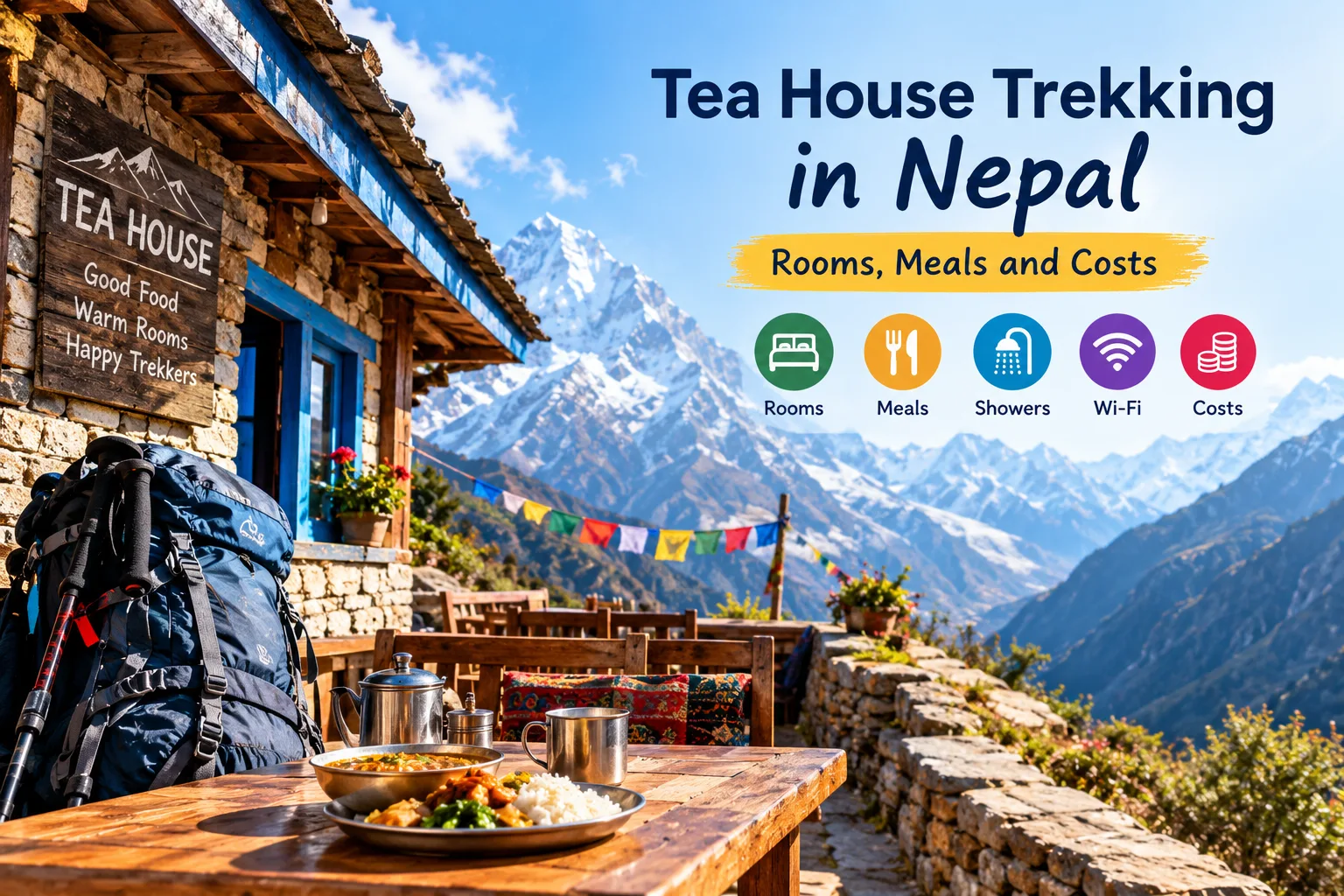
Tea House Trekking in Nepal: Rooms, Meals and Costs
28/10/2026
Tea house trekking in Nepal is one of the easiest ways to explore the Himalayas without carrying camping equipment or setting up a tent every night. Along many popular trekking routes, you can walk through mountain villages during the day and stay in a local lodge at night.
However, tea houses are not all the same. Some offer comfortable rooms, hot showers and internet access, while others have basic facilities, shared bathrooms and limited electricity. The experience also changes with the trekking region, altitude, season and the lodge you choose.
If you are planning a trek in Nepal, understanding the accommodation, food, facilities and extra costs will help you prepare properly. Here is what to expect from tea house trekking in Nepal before you set off.
1. What Is Tea House Trekking in Nepal?
Tea house trekking means walking between villages and staying overnight in local guesthouses or mountain lodges along the trail. Instead of carrying a tent, cooking equipment and all your food, you use the accommodation and dining facilities available along your route.
Most tea houses provide a place to sleep and serve meals. Depending on the location, they may also offer showers, device charging, Wi-Fi and other basic services.
Tea house trekking is popular on routes such as Everest Base Camp, Gokyo Lakes, Langtang Valley, Annapurna Base Camp and the Annapurna Circuit. The level of comfort varies from one trail to another and even between lodges in the same village.
A typical trekking day involves walking for several hours, reaching your overnight stop in the afternoon and having dinner at the lodge. You usually eat in a shared dining room, where trekkers gather to relax, warm up and talk about the day's walk.
Is tea house trekking suitable for beginners?
Yes, many beginners choose tea house trekking because they do not need to carry camping gear. However, the route still matters. Walking distance, altitude, trail conditions and the number of acclimatisation days all affect how demanding a trek will be. Choosing suitable accommodation does not remove the physical challenges of trekking in the mountains.
2. Typical Room Types and Facilities
The rooms available on a Nepal trek depend on the lodge and its location. You should expect simpler facilities in remote or high-altitude areas than you might find in a city hotel.
Twin rooms and shared accommodation
Many tea houses offer basic twin rooms with two single beds. A room may include a mattress, pillow and blanket, although the quality and availability of bedding vary.
Some lodges have private rooms with attached bathrooms, but these are not available everywhere. In busy seasons, popular stops can fill up, so you should not assume that your preferred room type will always be available.
Most rooms are designed for sleeping rather than spending long periods indoors. Furniture may be limited, and insulation can be basic. Nights can feel cold, especially at higher elevations.
Private or shared bathrooms
Some guesthouses provide attached bathrooms, while others have shared toilets and washing facilities outside the room or along a common corridor.
The standard can change as you move higher into the mountains. A lodge in a larger village may offer more facilities than a small guesthouse at a remote overnight stop.
Blankets and bedding
Tea houses commonly provide bedding, but warmth and cleanliness standards can differ. Bringing a suitable sleeping bag gives you more control over your comfort, particularly during colder months or on higher routes.
Check your trekking package before departure to understand what bedding is included and what equipment you should bring yourself.
3. Tea House Food in Nepal
Food is an important part of the tea house experience. Most lodges have a dining menu with a mixture of Nepali meals and familiar dishes for international trekkers.
The exact menu depends on the lodge, available supplies and location. Options may become more limited in remote areas.
Common meals on the trail
You may find dishes such as:
Dal bhat: Rice, lentil soup and vegetable curry, sometimes served with additional sides.
Noodles and fried rice: Common choices for lunch or dinner.
Soups: A warming option after a long day of walking.
Eggs and potatoes: Often available in different forms.
Porridge, pancakes and toast: Breakfast options at many lodges.
Tea and coffee: Popular drinks in the dining room.
Dal bhat is a familiar choice for many trekkers because it provides carbohydrates and other nutrients needed during a physically demanding day. Portion sizes and the availability of refills depend on the lodge.
How much does food cost?
Food prices vary by trekking region, altitude, lodge and season. Supplies often need to travel long distances to reach remote villages, which can make meals and drinks more expensive than in Kathmandu or Pokhara.
For a realistic budget, check current menu prices or ask your trekking company for estimates specific to your route. Do not base your entire budget on prices from a different trekking region.
It is also worth asking about meal arrangements when booking a guided trek. Some packages include meals, while others cover accommodation only or use a different arrangement.
Drinking water
Safe drinking water deserves attention during any trek. You may be able to buy bottled water or boiled water at lodges, but availability, price and waste-management options vary.
Many trekkers carry a reusable bottle and use an appropriate water-treatment method, such as a suitable filter or purification tablets. Follow the product instructions and make sure your method is suitable for the water source.
Avoid assuming that clear mountain water is safe to drink without treatment.
4. Toilets, Showers and Hot Water
Bathroom facilities are one of the biggest differences between staying in a city hotel and trekking in the Himalayas.
Some tea houses have modern bathrooms with flush toilets and showers. Others have simpler shared facilities, including squat toilets. The facilities available depend on the village, lodge and local infrastructure.
Are hot showers available?
Hot showers are available at many stops on popular trekking routes, but they are not guaranteed. Some lodges provide gas-heated or solar-heated showers, while others may have limited hot water or no shower facilities at all.
A shower may cost extra, so include this possibility in your budget. During cold weather, you may also prefer a quick wash rather than a full shower.
What if there is no shower?
You can carry a small quick-drying towel, biodegradable wipes where appropriate, and basic toiletries. These items help you maintain personal hygiene when a shower is unavailable.
Use water carefully, especially in places where supplies are limited. Follow the lodge's instructions about washing, waste disposal and toilet facilities.
If having a private bathroom or regular hot showers is important to you, mention this before booking. Your trekking company can explain what is realistic for the route you plan to follow.
5. Charging Devices and Internet Access
Many trekkers want to keep their phones charged, share photographs and stay in touch with family. These facilities are available in some tea houses, but access can become less reliable in remote mountain areas.
Charging your phone and camera
Some lodges offer charging points in rooms, while others provide charging in a shared dining area. A fee may apply, and electricity availability can depend on the local power supply.
Carry a power bank and the correct charging cables. If you use a camera, smartwatch, GPS device or other electronics, plan your battery use carefully.
A small power bank is useful, but remember to check airline rules before flying with spare batteries.
Is Wi-Fi available on Nepal treks?
Some tea houses offer Wi-Fi, sometimes for an additional charge. The connection may be slow, unreliable or unavailable during bad weather or power interruptions.
Mobile network coverage also varies by location and provider. Do not depend on a continuous internet connection for navigation, communication or emergencies.
Download offline maps, save important booking details and keep emergency contact information available without an internet connection. If you need to communicate regularly during the trek, discuss mobile coverage and other options with your trekking company before departure.
6. How Accommodation Costs Work
The cost of Nepal trekking accommodation depends on the route, altitude, season, lodge standard and room availability. There is no single price that applies to every tea house in Nepal.
A room may appear inexpensive, but your total daily spending can include meals, drinks, hot showers, device charging, Wi-Fi and snacks.
What affects the cost?
Several factors can change your accommodation expenses:
Trekking region: Popular routes and remote areas can have different price structures.
Altitude and transport access: Moving supplies to remote villages can increase operating costs.
Season: Busy trekking periods may affect availability and the arrangements you can secure.
Room type: Private bathrooms and upgraded rooms may cost more than basic shared facilities.
Additional services: Showers, charging, internet access and certain drinks may be charged separately.
Are meals included in the room price?
Do not assume that they are. Some lodges charge separately for rooms and meals, and some trekking packages arrange accommodation and meals together.
Before you confirm your trek, ask your operator what the quoted price includes. Find out if accommodation, breakfast, lunch, dinner, drinking water and other services are covered or paid for separately.
Ask for current estimates for your specific itinerary rather than relying on a general daily price found online. This will help you plan a more realistic budget.
7. Differences Between Trekking Regions
Tea house facilities vary across Nepal. Your route determines which villages you pass through, the type of accommodation available and how easy it is to access supplies.
Everest Base Camp and Gokyo Lakes
The Everest region has established trekking villages and a range of lodges along the main trails. Facilities differ between stops, and higher-altitude settlements may have fewer options or more basic services.
The Gokyo Lakes route shares some sections with the Everest Base Camp trekking area, but your exact overnight stops depend on the itinerary. Check room arrangements, meal plans and available services before departure.
Explore our [Everest Base Camp Trek] and [Gokyo Lakes Trek] packages to compare routes and discuss accommodation expectations.
Langtang Valley
Langtang Valley trekking takes you through mountain settlements where local guesthouses support trekkers along the route. Facilities vary by village, and you should be prepared for simpler rooms and shared bathrooms.
If you prefer a quieter trekking experience, discuss the itinerary, daily walking distances and overnight stops before booking. These details help you understand the level of comfort available along the trail.
See our [Langtang Valley Trek] package for route information and accommodation planning.
Annapurna Base Camp
The Annapurna Base Camp route passes through established trekking villages and mountain lodges. Room types and facilities can change as you gain altitude, so a comfortable guesthouse at a lower stop does not guarantee the same facilities higher up.
Ask about the planned overnight villages, bathroom arrangements and whether your package includes meals.
Learn more about our [Annapurna Base Camp Trek].
Annapurna Circuit
The Annapurna Circuit covers a wider range of landscapes and settlements, with accommodation options changing along the route. Some stops have a broader selection of services, while others offer simpler facilities.
Because the itinerary and overnight locations can vary, discuss your planned route with your trekking company. This is particularly important if you have specific requirements for bathrooms, connectivity or room comfort.
Explore our [Annapurna Circuit Trek] package for more information.
The main point: Do not choose a trek based only on the facilities shown in a photograph. Ask about the actual overnight stops on your proposed itinerary.
8. What to Bring for Overnight Stays
You do not need to pack everything for a tea house trek, but a few personal items can make each night more comfortable.
Consider bringing:
A suitable sleeping bag for the expected temperatures and season.
A quick-drying towel and personal toiletries.
A headlamp or small torch.
Earplugs if you are a light sleeper.
A power bank and charging cables.
Reusable water bottles and a suitable water-treatment method.
Hand sanitiser and personal hygiene supplies.
Warm sleepwear, socks and a spare base layer.
Cash in small denominations for services that may not accept card payments.
Any personal medication you need.
Pack according to your route and the time of year. You may not need every item on every trek, and your operator can clarify what is already included.
For a more detailed checklist, read our [Annapurna Base Camp Trek Packing List] and [Everest Base Camp Trek Packing List] articles when available.
9. Responsible Guesthouse Etiquette
Tea houses are part of the communities that make trekking in Nepal possible. Treating lodge owners, staff and other guests with respect helps make the experience better for everyone.
A few simple habits go a long way.
Order meals at your lodge. Many tea houses offer lower room rates on the understanding that guests will eat there. Ask about the lodge's policy instead of assuming you can use the room without purchasing meals.
Respect local customs. Follow guidance about shoes, indoor spaces, photography and religious or cultural practices. Ask before photographing people.
Save water and electricity. Hot water and power can be limited, especially in remote settlements. Keep showers short and avoid leaving lights or devices running unnecessarily.
Keep shared spaces tidy. Remove your belongings from communal areas, dispose of rubbish properly and keep noise down at night.
Carry reusable items. A reusable bottle and shopping bag can help reduce the amount of waste you generate. Follow local waste-disposal rules, as facilities differ between villages.
Be patient with service. Supplies may need to travel long distances, and meals can take time to prepare when a lodge is busy. A little patience and courtesy make a difference.
10. Choosing a Trek Based on Comfort Preferences
If accommodation matters to you, think about your expectations before choosing a route. Some trekkers are happy with a basic room and shared bathroom, while others prefer more facilities whenever possible.
Before booking, consider these questions:
Are you comfortable sharing a bathroom?
Do you need a hot shower every day?
Is reliable internet access important?
Do you have dietary requirements that need to be discussed in advance?
Are you willing to stay in basic rooms at higher elevations?
Would you prefer a shorter itinerary with more flexibility around overnight stops?
Be realistic about what is available. Even on popular routes, facilities can change from one village to the next. A trekking company can help you understand the likely accommodation standard, but it cannot guarantee that every lodge will offer the same services throughout the journey.
If comfort is a priority, discuss your needs before confirming the trip. Your operator may be able to recommend a suitable itinerary and explain where private rooms or upgraded facilities are more likely to be available.
Frequently Asked Questions (FAQs)
Q:
A: