
Table of Contents
- Why is spring a magical time to trek in Nepal
- 5. Mardi Himal Trek:
- 4. Langtang Valley Trek:
- 3. Ghorepani Poon Hill Trek (Annapurna):
- 2. Annapurna Base Camp Trek (ABC):
- 1. Everest Base Camp Trek (EBC):
- Best spring trek by difficulty
- Practical things to plan for spring treks
- Tips for better photos, sleep, and crowd management
- Frequently Asked Questions (FAQs)
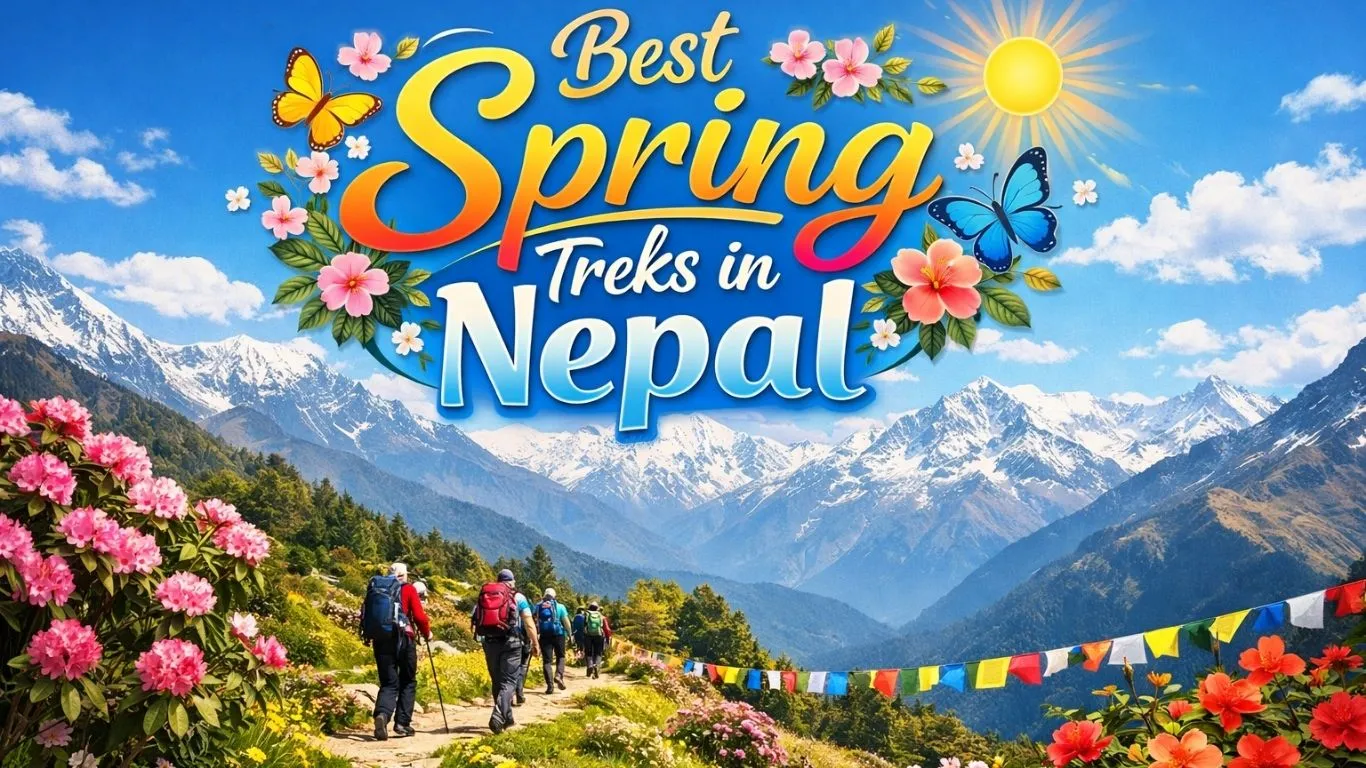
Top 5 Best Spring Treks in Nepal in 2026
30/12/2025
Spring in Nepal is a magical time for trekkers from all over the world. Rhododendron forests explode in color, the skies clear up, and the mountains put on their best show. If you are planning a trek between March and May, then it’s the best time to trek in Nepal.
You’ll find trails that range from mellow village walks to high-altitude adventures with amazing panoramas. Hi, my Name is Yogesh Kunwar, founder of Nepal Boundary Trekking Agency Pvt. Ltd. With over 12 years of experience in trekking in Nepal, I have ranked the top 5 spring treks in Nepal. From the gentler, less-crowded options to the big-ticket classic that every trekker dreams about.
Why is spring a magical time to trek in Nepal
Spring brings longer daylight, moderate temperatures in daytime, and the most famous rhododendron blooms, especially around April, which turns many trails into colorful tunnels of red and pink. Visibility tends to be excellent on many routes, so you get crisp and clear mountain views most mornings. It is one of the two main trekking seasons in Nepal. Services like tea houses, food, and guides are fully up and running.
5. Mardi Himal Trek:
Mardi Himal is a shorter trek in the Annapurna region. This trek rewards you with dramatic mountain views, including a close look at Machapuchare/ Fishtail without the crowds like ABC or Poon Hill. The route climbs through oak and rhododendron forests, so spring colors are especially vivid. You can do a solid itinerary in about 5-7 days, depending on your pace. It's ideal if you want impressive views and a quieter trail.
What to expect:
• Moderate daily distance
• Teahouse stays
• A final ridge/ High Camp with panoramic views
• Lots of spring blooms
If you have limited vacation days but still want the “big mountains” vibe, Mardi is a smart pick.
4. Langtang Valley Trek:
Langtang is underrated for how accessible and beautiful it is. A short drive from Kathmandu, it’s a relatively short drive, and the valley rewards you with alpine meadows, traditional Tamang Villages, and rhododendron forests that look amazing and feel like heaven in spring. It’s a great option to trek if you want a solid mountain atmosphere without committing to the longer Annapurna and Everest circuits. The itineraries run between 7-10 days, depending on how far you can push into the valley. Langtang also gives you a cultural angle: teahouses, local monasteries, and warm village hospitality. So, it’s a great blend of nature and culture.
What to expect:
• Easy access from Kathmandu
• Rhododendron forests in spring
• Alpine meadows and glaciers
• Traditional Tamang villages
• Rich Buddhist culture and monasteries
• Warm local teahouse hospitality
• Moderate difficulty, beginner-friendly
• Fewer crowds than Everest and Annapurna
• Strong mix of nature and culture
3. Ghorepani Poon Hill Trek (Annapurna):
If you only have a long weekend but still want an iconic trek in Nepal, Ghorepani Poon Hill is the one. The famous sunrise at Poon Hill (about 3210m/10,531ft) lights up the Annapurna and Dhaulagiri ranges, and in spring, the trek path passes through a beautiful and thick rhododendron forest. The most popular itineraries fit into 3-6 days from Pokhara, making it extremely accessible for international travelers looking for a quick mountain trek. Poon Hill can get busy because it’s a short and photogenic trek, but the payoff at sunrise makes it worth the early alarm.
What to expect:
• Short and time-friendly (3–6 days)
• Easy access from Pokhara
• Famous sunrise view from Poon Hill (3,210 m)
• Panoramic Annapurna & Dhaulagiri ranges
• Dense rhododendron forests in spring
• Well-marked and well-maintained trail
• Moderate difficulty, beginner-friendly
• Comfortable teahouse accommodation
• Lively villages and local culture
• Popular and sometimes busy, especially at sunrise
2. Annapurna Base Camp Trek (ABC):
ABC is one of Nepal's most loved spring treks. In this trek, you walk through terraced villages, rhododendron forests, and finally into the Annapurna Sanctuary, surrounded by towering mountain walls. Spring offers stable weather and warm temperatures in the daytime. So, trails are dry, and visibility is usually excellent. Typically, itineraries are between 7-12 days, depending on acclimatization days and route choices. It’s busier than smaller treks, but for good reason: the landscape variety and that “you-are-inside-the-mountains” feeling. A smooth transition from villages to high alpine: expect characterful tea houses until you reach base camp, where the scenery steals the show.
What to Expect:
• Diverse landscapes from villages to high alpine terrain
• Terraced farmlands and traditional mountain settlements
• Rhododendron forests in spring
• Stable spring weather and clear mountain views
• Gradual altitude gain with acclimatization days
• 7–12-day flexible itinerary options
• Comfortable teahouse stays along the route
• Dramatic mountain walls inside the Annapurna Sanctuary
• A true “inside the mountains” experience at base camp
• Busier trail compared to shorter treks, especially in peak season
1. Everest Base Camp Trek (EBC):
Everest Base Camp is at the top of the spring trek list for many trekkers. Spring gives you the best chance of taking clear views of Everest and its neighboring giants. In spring, the Kumbhu region buzzes with trekkers, festivals, and local life. The full EBC trek commonly takes 12-16 days from Lukla (including acclimatization), passing high points like Tengboche, Dingboche, Gorak Shep, Kala Patthar, and finally to EBC itself. Spring is one of the two peak trekking seasons for the region, because at that time the weather is stable and the skies are crystal clear. The most important thing to keep in mind before you trek to EBC is long and high. Proper acclimatization matters. Even in spring, you’ll want extra rest days and conservative pacing to reduce the risk of altitude sickness.
What to expect:
• Iconic route to the base of the world’s highest mountain
• Clear spring views of Everest and the surrounding peaks
• Lively trekking atmosphere in the Khumbu region
• Traditional Sherpa villages and monasteries
• Famous stops like Tengboche, Dingboche, Gorak Shep, and Kala Patthar
• Side hike to Kala Patthar for the best Everest views
• Long and physically demanding trek
• High altitude with serious acclimatization needs
• 12–16-day itinerary including rest days
• Peak-season crowds, especially in spring
Best spring trek by difficulty
• Easy: Ghorepani (Poon Hill): short days, accessible trails.
• Moderate: Mardi Himal or Langtang: varied terrain, moderate altitude.
• Challenging: Annapurna Base Camp or Everest Base Camp: longer, higher, and require more days and acclimatization.
Practical things to plan for spring treks
1. Permits & regulations
Most popular treks require a TIMS card and conservation or national park permits (e.g., Sagarmatha National Park for EBC, Annapurna Conservation Area permit for ABC). The Nepal Tourism Board also enforces rules around guides and agency-issued TIMS in specific protected areas to ensure safety and conservation. Make sure your agency sorts permits before you head out.
2. Weather & packing
Spring days often feel warm, while mornings and nights can be chilly at higher altitudes. Pack layers: a warm midlayer, windproof shell, insulated jacket for evenings, and good trekking boots. Don’t forget sunscreen and sun protection; the sun is stronger at higher altitudes.
3. Health & acclimatization
Even in spring, altitude is real. Build one extra acclimatization day on longer treks and monitor symptoms. Hydrate, avoid aggressive schedules, and talk to your guide if you start feeling off.
Tips for better photos, sleep, and crowd management
• Wake early for sunrise viewpoints (Poon Hill, Kala Patthar): the sunrise is amazing and unforgettable.
• Book high-demand teahouses or rooms in peak weeks (April–May) to avoid surprises.
• Start weekdays where possible to dodge weekend arrivals and groups.
• Carry a small power bank: electricity can be limited higher up.
If you need help selecting the ideal itinerary, I can tailor one to your specific dates and treks, taking into account your fitness level. I run Nepal Boundary Trekking Agency Pvt. Ltd. and have guided over 1,000 clients from around the world in my 12+ years of guiding and trekking experience. We offer custom trek plans, handle permits and logistics, and pair you with experienced local guides and porters so you can focus on the mountains and the views. You can contact us at Nepal Boundary Trekking Agency Pvt. Ltd. for booking a trek.
Frequently Asked Questions (FAQs)
Q: Is March a good month for trekking in Nepal?
A: Yes, March kicks off the spring window; trails warm up, rhododendrons begin to flower, and mornings often have excellent visibility. April is when blooms peak in many areas.
Q: Are spring treks crowded?
A: Some routes (EBC, ABC, Poon Hill) get busy during peak spring weeks, especially around Easter and local festivals. Choosing slightly earlier March dates or quieter routes like Mardi Himal helps avoid crowds.
Q: Do I need special permits?
A: Yes, TIMS and national park or conservation area permits apply to most major treks. Restricted areas (e.g., Upper Mustang) need additional permits. Your trekking agency should handle all paperwork.
Q: What fitness level do I need for EBC or ABC?
A: Both require decent fitness and endurance for multiple consecutive walking days at altitude. ABC is slightly less demanding than EBC in terms of altitude, but both reward training and good pacing.
Q: Can families do spring treks?
A: Yes, shorter treks like Poon Hill (Ghorepani) and Mardi Himal suit families and less experienced walkers. For EBC and ABC, consider extra acclimatization days and discuss age/fitness with your guide.