Table of Contents
- Quick Comparison
- Where Upper Mustang Is Located
- Where Nar Phu Valley Is Located
- Trekking Experience Comparison
- What Makes Upper Mustang Unique
- What Makes Nar Phu Valley Different
- Landscape Comparison
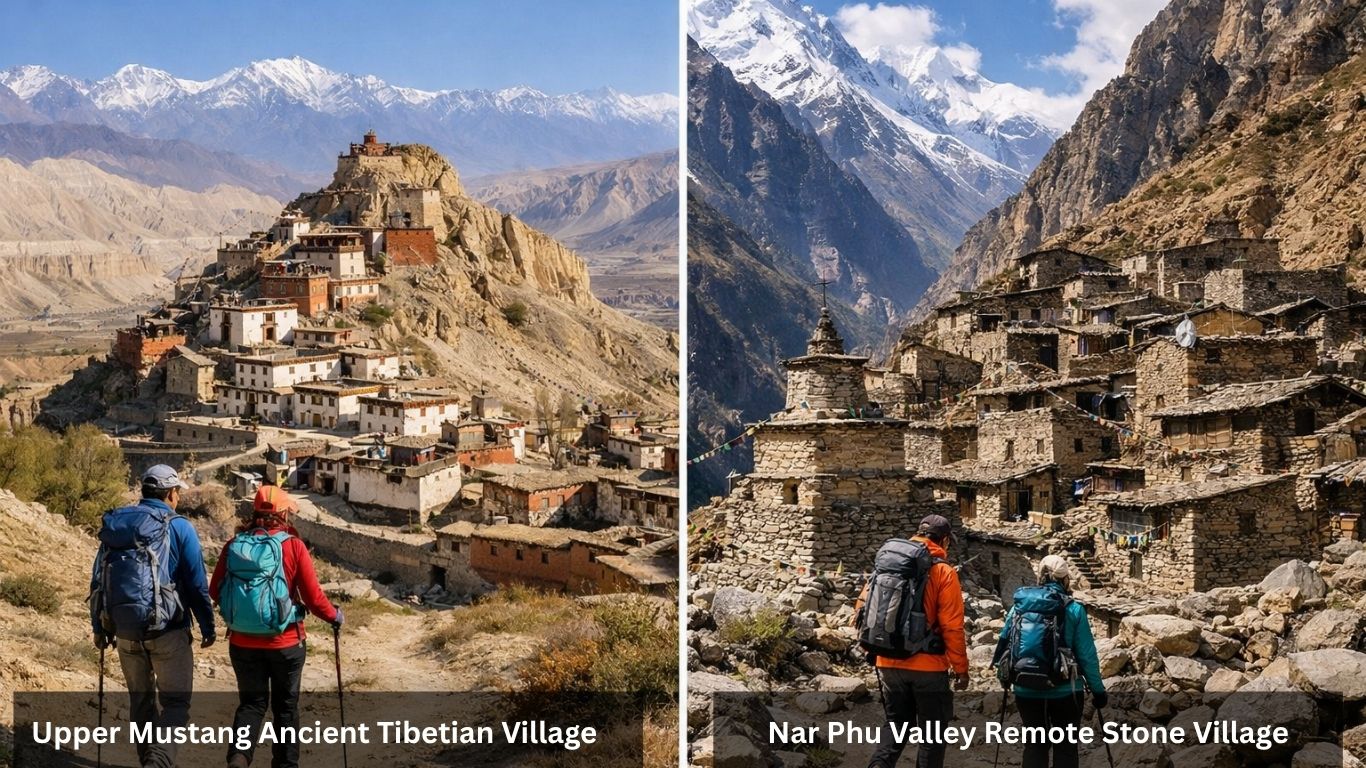
- Upper Mustang Landscape
- Nar Phu Valley Landscape
- Culture and Village Experience
- Cultural Feel in Upper Mustang
- Cultural Feel in Nar Phu Valley
- Difficulty Level for Remote Trekkers
- Upper Mustang Difficulty
- Nar Phu Valley Difficulty
- Which Trek Feels More Remote?
- Best Season for Each Trek
- Best Time for Upper Mustang
- Best Time for Nar Phu Valley
- Permit Cost Comparison
- Upper Mustang
- Nar Phu Valley
- Accommodation and Food on the Trail
- Tea Houses in Upper Mustang
- Tea Houses in Nar Phu Valley
- Who Should Choose Upper Mustang?
- Who Should Choose Nar Phu Valley?
- Conclusion
- Frequently Asked Questions (FAQs)
Upper Mustang vs Nar Phu Valley for Remote Trekking
01/04/2026
Nepal has many trekking routes, but some places still feel
truly untouched. If you want quiet trails, deep culture, and a journey far from
busy trekking crowds, two names often come first: Upper Mustang and Nar Phu
Valley.
Both treks take you into remote parts of Nepal, yet the
experience feels very different. Upper Mustang gives you dry desert valleys,
old Tibetan culture, and historic villages. Nar Phu Valley feels wilder,
quieter, and more isolated, with rough mountain trails and hidden settlements.
Many trekkers ask which route is better for a remote trekking experience. The answer depends on what kind of journey you want. Some people enjoy culture and open landscapes, while others want raw adventure and less human movement. This guide explains both treks clearly so you can choose the route that matches your travel style.
Quick Comparison
|
Feature |
Upper Mustang |
Nar Phu Valley |
|
Location |
Northern Nepal near the Tibetan border |
North of the Annapurna region |
|
Trekking Style |
Cultural, scenic, and historic |
Wild, remote, and adventurous |
|
Landscape |
Dry valleys, desert cliffs, open hills |
Narrow gorges, rocky trails, snow peaks |
|
Difficulty Level |
Moderate |
Moderate to challenging |
|
Altitude Challenge |
Manageable for many trekkers |
More demanding in higher sections |
|
Cultural Experience |
Ancient monasteries, Tibetan villages, Lo Manthang |
Isolated mountain villages with traditional lifestyle |
|
Remoteness |
Remote but with more village access |
More isolated and less visited |
|
Crowd Level |
Low |
Very low |
|
Permit Cost |
Higher restricted area permit |
Lower than Upper Mustang but still restricted |
|
Accommodation |
Better tea house availability |
Basic tea houses in remote villages |
|
Best Season |
Spring, summer, and autumn |
Spring and autumn |
|
Best For |
Trekkers who enjoy culture and moderate walking |
Trekkers who want raw adventure and quiet trails |
Where Upper Mustang Is Located
Upper Mustang lies in northern Nepal near the Tibetan
border. It sits in a rain shadow area, so the land stays dry even during
monsoon months. This region was once a separate kingdom, and many old
traditions still remain strong today.
The trek usually starts after reaching Jomsom and continues
toward ancient villages, monasteries, and finally Lo Manthang.
Because this is a restricted area, trekkers need a special
permit.
Where Nar Phu Valley Is Located
Nar Phu Valley lies north of the Annapurna region. This
hidden valley stayed closed to outsiders for many years, so it still feels
untouched.
The route leaves the main Annapurna trail and enters a
remote mountain valley where traditional villages sit between high cliffs and
snow peaks.
Villages like Nar and Phu still keep their old lifestyle,
and fewer trekkers visit this area compared to many other routes in Nepal.
Trekking Experience Comparison
Although both treks are remote, the feeling on the trail
changes greatly from one route to the other.
What Makes Upper Mustang Unique
Upper Mustang feels open and historic. You walk through wide
valleys, cross dry hills, and pass villages built in old Tibetan style.
Ancient caves cut into cliffs make this route even more
special. Some caves are hundreds of years old and still attract visitors today.
The trail also gives you a rare chance to experience a place
where culture has changed very little over time.
What Makes Nar Phu Valley Different
Nar Phu Valley feels more hidden and wild. Trails pass
through narrow canyons, rocky paths, and quiet mountain villages.
You may walk for hours without seeing many people. This
creates a stronger feeling of isolation.
For trekkers who want silence and a true off-the-map
feeling, Nar Phu often feels deeper and more adventurous.
Landscape Comparison
The visual difference between these two treks is one of the
biggest reasons people choose one over the other.
Upper Mustang Landscape
Upper Mustang looks almost like another world.
You see:
- Dry
red cliffs
- Desert
hills
- Wide
open valleys
- Deep
canyon walls
The sky often stays very clear, which makes photography
excellent.
Nar Phu Valley Landscape
Nar Phu Valley looks rougher and more dramatic.
You see:
- Steep
rocky gorges
- Snow-covered
mountain walls
- High
passes
- Narrow
valley trails
The changing terrain gives strong adventure energy from
beginning to end.
Culture and Village Experience
Remote trekking is not only about nature. Culture often
becomes the strongest memory.
Cultural Feel in Upper Mustang
Upper Mustang has a very rich Tibetan cultural identity.
You visit:
- Ancient
monasteries
- Prayer
walls
- Traditional
mud villages
- Historic
Lo Manthang streets
The people here still follow old customs, and many homes
reflect centuries of local history.
Cultural Feel in Nar Phu Valley
Nar Phu also has Tibetan influence, but village life feels
even more isolated.
The villages remain simple, quiet, and less touched by
tourism.
Daily life still follows old mountain traditions, and this
makes every village stop feel authentic.
Difficulty Level for Remote Trekkers
Choosing the right trek also depends on your physical
comfort.
Upper Mustang Difficulty
Upper Mustang suits trekkers who want moderate walking.
The trail usually includes:
- Steady
daily walking
- Less
technical difficulty
- Dry
climate that helps walking comfort
Altitude still matters, but the route often feels manageable
for many trekkers with normal fitness.
Nar Phu Valley Difficulty
Nar Phu Valley demands more effort.
This route includes:
- Rougher
trail sections
- Higher
altitude sections
- Longer
remote stretches
Some trekkers find this route more tiring because of its
wild terrain.
Which Trek Feels More Remote?
Both treks are remote, but Nar Phu Valley usually feels more
isolated. Upper Mustang has more villages and a clearer trekking flow. Nar Phu
gives longer quiet sections with fewer trekkers and less movement. If your goal
is pure remoteness, Nar Phu often wins.
Best Season for Each Trek
Weather changes your trekking experience a lot.
Best Time for Upper Mustang
Upper Mustang works very well in:
- Spring
- Summer
- Early
autumn
Because it lies in a rain shadow area, even monsoon season
can work here.
Best Time for Nar Phu Valley
Nar Phu gives best conditions in:
- Spring
- Autumn
Clear skies during these seasons improve mountain views and
trail comfort.
Permit Cost Comparison
Both treks need special permits.
Upper Mustang
You need:
- Restricted
area permit
- Annapurna
conservation permit
Upper Mustang permit cost stays higher because of restricted
access.
Nar Phu Valley
You need:
- Restricted
area permit
- Annapurna
conservation permit
Nar Phu also requires permits, but total cost often stays lower than Upper Mustang. Permit rules can change, so checking before booking is always wise.
Accommodation and Food on the Trail
Food and sleeping conditions also affect comfort.
Tea Houses in Upper Mustang
Upper Mustang has better-developed tea house options in many
villages.
You usually find:
- Dal
bhat
- Noodles
- Soup
- Tea
- Basic
rooms
Tea Houses in Nar Phu Valley
Nar Phu tea houses stay more basic.
Choices are limited in remote sections, but local
hospitality remains warm.
Who Should Choose Upper Mustang?
Upper Mustang fits trekkers who want:
- Rich
culture
- Moderate
walking
- Historic
villages
- Unique
desert views
It suits travelers who enjoy both comfort and cultural
discovery.
Who Should Choose Nar Phu Valley?
Nar Phu Valley fits trekkers who want:
- Strong
adventure
- Deep
remoteness
- Fewer
people
- Rough
mountain experience
This route suits trekkers who enjoy harder trails and quiet
nature.
Conclusion
Both treks offer something rare in Nepal. Choose Upper Mustang if culture, history, and wide dry landscapes attract you more. Choose Nar Phu Valley if you want a raw, hidden valley and a stronger remote adventure.
Some trekkers even return to Nepal just to complete both
because each route feels completely different. If you want expert local
guidance for either route, Nepal Boundary Trekking can help you choose the trek
that matches your time, fitness, and travel goals.
Frequently Asked Questions (FAQs)
Q: Is Upper Mustang easier than Nar Phu Valley?
A: Yes, Upper Mustang usually feels easier because trails stay more open and less rough.
Q: Which trek has fewer tourists?
A: Nar Phu Valley usually gets fewer trekkers.
Q: Can beginners do Upper Mustang?
A: Yes, beginners with basic fitness can complete Upper Mustang with proper preparation.
Q: Is Nar Phu Valley safe without a guide?
A: A guide is strongly recommended because remote sections can feel difficult.
Q: Which trek gives better cultural experience?
A: Upper Mustang usually offers a stronger cultural experience because of historic villages and ancient heritage.