
Table of Contents
- Where Is Ama Dablam and Why It Stands Out
- The Meaning Behind the Name “Ama Dablam”
- A Mountain with Perfect Shape and Balance
- Changing Colors from Sunrise to Sunset
- Ama Dablam Up Close: Views from the Trekking Trail
- Spiritual and Cultural Importance in the Khumbu Region
- Why Climbers Respect Ama Dablam More Than Taller Mountains
- Ama Dablam vs Other Famous Mountains
- Why Trekking to Ama Dablam Base Camp Makes the Beauty Unforgettable
- Best Time to See Ama Dablam at Its Most Beautiful
- Beauty Beyond Height and Fame
- Frequently Asked Questions (FAQs)
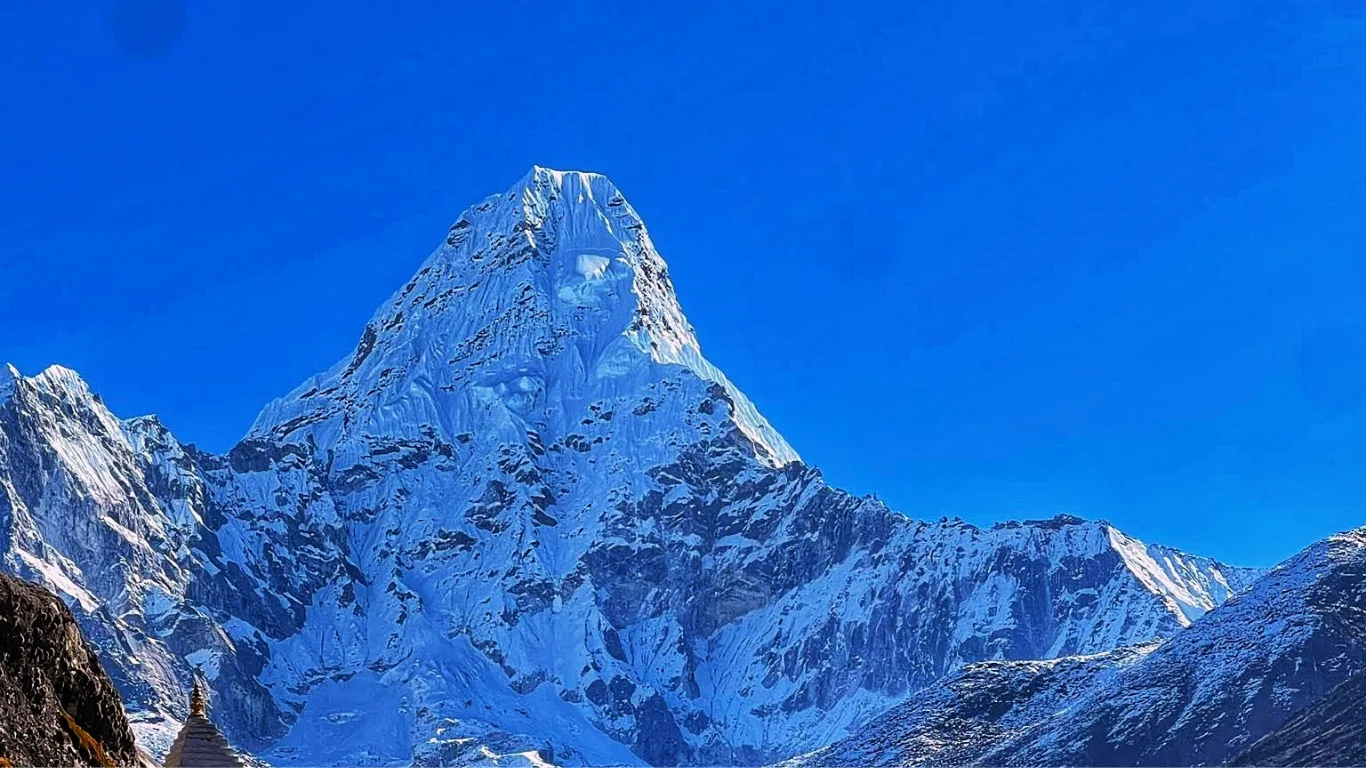
Why Ama Dablam Is Called the Most Beautiful Mountain in the World?
02/01/2026
Some mountains impress you with their size. Others leave you
speechless with their beauty. Ama Dablam does both, but in a way that feels
deeply personal.
For many trekkers walking through Nepal’s Everest region,
the first glimpse of Ama Dablam becomes a moment they never forget. You don’t
need binoculars. You don’t need to climb high. It rises suddenly, sharply, and
gracefully, almost as if it’s watching over the trail. Ask climbers,
photographers, or trekkers who have seen it up close, and you’ll hear the same
thing again and again: Ama Dablam is one of the most beautiful mountains in
the world.
At Nepal Boundary Trekking Agency Pvt. Ltd., our local guides have spent years trekking the Khumbu region to date, and we’ve seen this
reaction many times: the quiet pause, the deep breath, the sudden reach for a
camera that can’t quite capture what the eyes are seeing.
So, what makes Ama Dablam so special? Why does it steal
attention even in a land filled with giants like Everest and Lhotse? Let’s walk
through the story.
Where Is Ama Dablam and Why It Stands Out
Ama Dablam stands at 6,812 meters in Nepal’s Khumbu region,
not far from the famous Everest Base Camp trail. But unlike Everest, which
often feels distant and massive, Ama Dablam feels close, almost within reach.
As you trek through villages like Namche Bazaar,
Pangboche, and Dingboche, Ama Dablam appears again and again, each time
from a new angle. The mountain doesn’t hide behind others. It commands the
skyline with confidence, rising sharply from the valley floor.
What truly sets it apart is how present it feels. You
don’t just see Ama Dablam, you walk beside it for days. It becomes a companion
on the trail.
The Meaning Behind the Name “Ama Dablam”
The beauty of Ama Dablam isn’t just physical, it’s emotional
and cultural too.
In the Sherpa language, “Ama” means mother, and “Dablam”
refers to a sacred necklace traditionally worn by Sherpa women. The long
ridges of the mountain resemble the arms of a mother protecting her child,
while the hanging glacier looks like the Dablam itself.
This meaning gives the mountain a deeply human quality. For
local communities, Ama Dablam is not just a peak; it’s a protector, a presence,
and a symbol of care. This emotional connection adds another layer to its
beauty, something you can feel as you pass through monasteries and
prayer-flag-lined trails beneath it.
A Mountain with Perfect Shape and Balance
If Everest is powerful, Ama Dablam is elegant.
Its steep faces, sharp ridgelines, and almost symmetrical
pyramid shape make it visually stunning from every angle. There’s a balance to
Ama Dablam that feels rare; nothing looks out of place. Every ridge flows
naturally into the next.
Climbers often say that Ama Dablam looks like a mountain
drawn by an artist rather than formed by nature. It’s dramatic without being
overwhelming, complex without being chaotic. This perfect balance is one of the
biggest reasons it’s often called the most beautiful mountain in the world.
Changing Colors from Sunrise to Sunset
Ama Dablam is never the same mountain twice in one day.
At sunrise, the first light paints it in soft gold,
slowly waking the ridges and glaciers. During the day, it turns crisp white and
deep blue under clear Himalayan skies. By sunset, the mountain glows
with shades of pink, orange, and purple, creating moments that leave trekkers
silent.
Photographers chase this light, but even without a camera,
standing still and watching Ama Dablam change colors is an experience that
stays with you long after the trek ends.
Ama Dablam Up Close: Views from the Trekking Trail
One of the reasons Ama Dablam feels so special is how close
you can get without technical climbing.
The Ama Dablam Base Camp Trek offers some of the most
intimate mountain views in the Everest region. From Pangboche Monastery,
you can see the mountain rising directly above ancient stone walls and prayer
flags, a powerful mix of nature and spirituality.
As you move higher, the mountain feels larger, sharper, and
more alive. Many trekkers tell us that standing at Ama Dablam Base Camp feels
more emotional than reaching Everest viewpoints because the mountain feels so
near, so personal.
Spiritual and Cultural Importance in the Khumbu Region
Ama Dablam holds a special place in Sherpa beliefs. Villages
and monasteries around the mountain treat it with respect and reverence. Prayer
flags flutter in the wind, carrying wishes toward their peaks.
Places like Pangboche Monastery, one of the oldest in
the region, sit quietly under Ama Dablam’s watchful presence. The combination
of spirituality, silence, and scenery creates an atmosphere that feels deeply
peaceful, something many trekkers describe as grounding and humbling.
Why Climbers Respect Ama Dablam More Than Taller Mountains
Although Ama Dablam is much lower than Everest, climbers
often say it’s technically more challenging.
Its steep ice faces, narrow ridges, and exposed routes
demand skill, experience, and respect. Because of this, Ama Dablam has earned a
reputation among climbers as a “mountaineer’s mountain,” beautiful, dangerous,
and rewarding.
This mix of elegance and difficulty adds to its legend. It’s
not just admired from far away; it’s deeply respected.
Ama Dablam vs Other Famous Mountains
In a region filled with famous peaks, Ama Dablam still
stands out.
- Everest
is taller, but often feels distant
- Lhotse
is powerful, but less visually striking
- Machapuchare
is sacred, but inaccessible
Ama Dablam feels different. It’s visible, approachable, and
emotionally engaging. It doesn’t dominate by size; it captivates by presence.
Why Trekking to Ama Dablam Base Camp Makes the Beauty Unforgettable
Seeing Ama Dablam from a distance is impressive. Trekking
toward it is unforgettable.
Each step brings you closer, revealing new details: the hanging glacier, the sharp ridges, the way clouds wrap around its summit. By the time you reach base camp, the mountain no longer feels like a photograph. It feels like a relationship. Many trekkers combine this journey with the classic Everest Base Camp Trek to experience the full beauty of the Khumbu region.
This is why many of our guests at Nepal Boundary Trekking Agency Pvt. Ltd. say the Ama Dablam Base Camp Trek becomes the highlight of their entire Nepal journey.
Best Time to See Ama Dablam at Its Most Beautiful
- Autumn
(September–November): Clear skies, sharp mountain views, perfect light
- Spring
(March–May): Snow contrast, warmer days, blooming landscapes
Both seasons offer stunning views, but autumn is often
considered the best for photography and long-range visibility.
Beauty Beyond Height and Fame
Ama Dablam reminds us that beauty isn’t about being the
tallest or the most famous. It’s about balance, meaning, and how something
makes you feel.
For trekkers, climbers, and travelers alike, Ama Dablam
isn’t just a mountain; it’s an experience, a memory, and a quiet moment of awe
in the heart of the Himalayas.
If you’re dreaming of seeing the most beautiful mountain in the world with your own eyes, Nepal Boundary Trekking Agency Pvt. Ltd. would be honored to guide you there.
Frequently Asked Questions (FAQs)
Q: Why is Ama Dablam considered the most beautiful mountain?
A: Because of its sharp pyramid shape, hanging glacier, cultural meaning, and how close trekkers can experience it in the Everest region.
Q: Is Ama Dablam higher than Mount Everest?
A: No, Ama Dablam is 6,812 meters, much lower than Everest, but many people find it more visually striking.
Q: Can beginners trek to Ama Dablam Base Camp?
A: Yes. With proper acclimatization and a guide, it’s suitable for fit beginners with some trekking experience.
Q: How long is the Ama Dablam Base Camp Trek?
A: Most itineraries range from 7 to 10 days, often combined with Everest region routes.
Q: What is the best time to see Ama Dablam clearly?
A: Autumn (September–November) and spring (March–May) offer the clearest skies and best mountain views.