
Table of Contents
- Local trekking companies understand Nepal in real conditions
- You usually get better value for your money
- Local guides often improve the trek far beyond logistics
- International agencies often use local operators anyway
- Local Company vs International Agency
- Your booking directly supports Nepal's mountain economy
- Communication with local companies has improved greatly
- Local companies adapt faster when plans change
- How to choose a reliable local trekking company
- Conclusion
- Frequently Asked Questions (FAQs)
Why Book with a Local Trekking Company Instead of International Agencies
15/03/2026
Planning a trek in Nepal feels exciting, but choosing who
should organize your trip often becomes the hardest part. Many travelers first
discover large international travel agencies because those brands appear
everywhere online. Their websites look polished, their marketing feels
familiar, and the booking process seems easy. However, once you look deeper,
you often find that a local trekking company offers more practical value,
stronger support, and a much richer travel experience.
Nepal attracts trekkers from around the world because of
iconic routes like Everest Base Camp, Annapurna Base Camp, and Langtang Valley.
These treks take you through remote mountain villages, changing weather
conditions, and high-altitude terrain where local knowledge matters every
single day. Because of that, the company you choose directly affects how
smoothly your journey goes.
Although international agencies often look appealing at
first, many of them rely on local operators in Nepal to deliver the actual
trekking service. That means your guide, porter, accommodation coordination,
permits, and daily logistics may still come from a Nepal-based company.
Therefore, booking directly with a local trekking company often removes
unnecessary layers and gives you direct access to the people who actually
manage your trip.
If you are comparing options before booking your next
Himalayan adventure, understanding the real differences can help you make a
smarter decision.
Local trekking companies understand Nepal in real conditions
A local trekking company works in Nepal every day. That may
sound obvious, but it creates a major advantage for travelers.
Trekking conditions in Nepal change quickly depending on
season, altitude, weather, and trail traffic. A route that looks simple in
spring may become challenging after rainfall or snowfall. Local operators
monitor these changes constantly because their guides and field teams stay
active on the trails throughout the year.
For example, during the trekking season, local teams often
receive immediate updates about tea house availability, landslides, delayed
domestic flights, or route diversions. International agencies usually depend on
second-hand updates, while local operators often hear these details directly
from guides already on the route.
As a result, local companies can adjust itineraries quickly
when conditions shift.
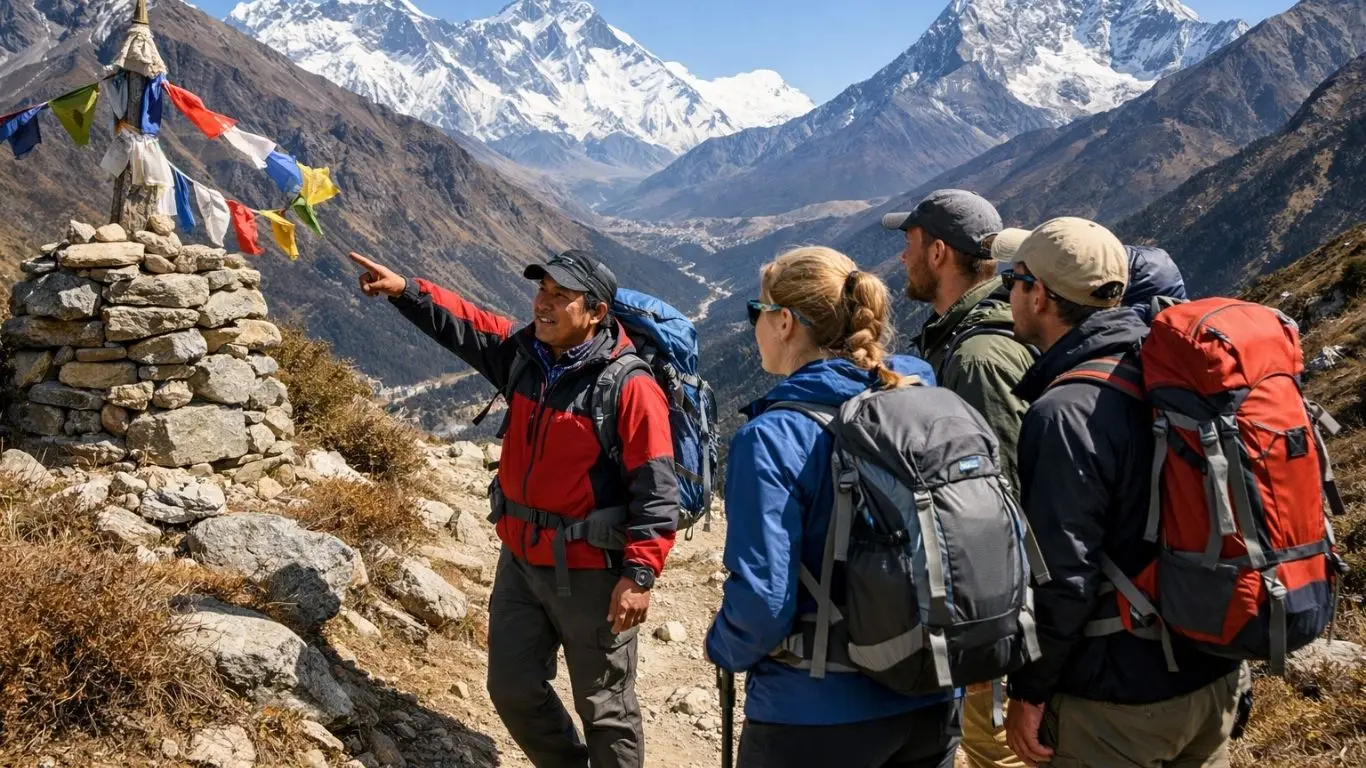
In addition, local guides explain far more than just trail
directions. They introduce you to mountain culture in a natural way. While
walking through villages, they share local customs, explain Buddhist symbols,
describe seasonal farming practices, and help you understand everyday life in
the Himalayas.
That local perspective often becomes one of the most
memorable parts of the journey.
You usually get better value for your money
Price matters to almost every traveler, especially when
planning a multi-day trek in Nepal. Yet many people focus only on the first
number they see without understanding how pricing works behind the scenes.
International agencies often add administrative layers,
marketing costs, overseas staffing costs, and commission margins before sending
the booking to Nepal. That raises the total price even when the ground service
remains the same.
By contrast, a local trekking company usually offers direct
pricing because the same team handles planning, permits, guide coordination,
and field operations.
This does not always mean the cheapest option, but it often
means better value.
For example, when you book directly, you can usually
discuss:
- hotel
category before and after the trek
- private
transport options
- porter
arrangements
- meal
preferences
- extra
acclimatization days
- flexible
return schedules
That level of customization becomes much harder when
multiple agencies sit between you and the actual operator.
Furthermore, local companies often explain exactly what your
package includes. This transparency helps you avoid unexpected costs later.
Local guides often improve the trek far beyond logistics
A good guide does much more than lead the trail.
In Nepal, local guides often shape the emotional quality of
the trek itself. They know where to pause for the best mountain views, when to
leave early for clear weather, and how to pace the day according to altitude.
This becomes especially important at higher elevations near
Kala Patthar or other demanding viewpoints where small timing decisions affect
both comfort and safety.
Moreover, local guides understand how different trekkers
respond to altitude. Some people walk strongly at lower elevations but struggle
above 3,500 meters. Others need slower pacing earlier than expected.
Because local guides see these patterns regularly, they
often make small adjustments before problems become serious.
They also build stronger human connections during the
journey.
Many travelers remember conversations with guides more
vividly than the itinerary itself because those conversations reveal the
personal side of Nepal, including family life, education, mountain traditions,
and local history.
That human element rarely appears in a brochure, but it
often defines the trip.
International agencies often use local operators anyway
This is one of the most overlooked facts in trekking
tourism.
A large number of international agencies do not directly run
trekking operations inside Nepal. Instead, they partner with Nepal-based
trekking companies that handle all local logistics.
That means:
- local
companies secure permits
- local
companies assign guides
- local
companies arrange porters
- local
companies manage transport
- local
companies solve emergencies
In many cases, the traveler pays significantly more while
receiving the same field service.
Therefore, booking directly often gives you the exact same
operational support while removing unnecessary communication layers.
It also creates faster answers before the trip.
When you ask a local operator a question about weather,
permits, domestic flights, or accommodation, you often receive answers from
people who manage these details daily.
That direct communication reduces confusion and builds trust
early.
Local Company vs International Agency
|
Factor |
Local Trekking Company |
International Agency |
|
Price |
Direct rates with fewer added costs |
Higher overall pricing because of commission layers |
|
Flexibility |
Easy itinerary adjustments |
Changes often require multiple approvals |
|
Guide Quality |
Route-specific local experience |
Often outsourced to local teams |
|
Local Impact |
Supports Nepal directly |
A large share leaves Nepal |
|
Communication |
Direct trip coordination |
Often filtered through sales teams |
This comparison helps travelers understand why many
experienced trekkers prefer local booking after their first visit to Nepal.
Your booking directly supports Nepal's mountain economy
Tourism supports thousands of families across Nepal,
especially in trekking regions.
When you book through a local trekking company, a larger
share of your payment stays inside Nepal. That money directly supports:
- guides
- porters
- drivers
- tea
house owners
- local
food suppliers
- small
village businesses
This creates real economic impact in mountain communities
where tourism often remains the main source of income.
For example, villages along major trekking routes depend
heavily on seasonal visitors. Every booking contributes to local livelihoods
beyond the company itself.
Additionally, local operators often maintain long-term
working relationships with mountain staff. That helps create more stable
employment across trekking seasons.
Travelers increasingly care about responsible tourism, and
direct local booking often aligns better with that goal.
Communication with local companies has improved greatly
Some travelers still assume communication may feel difficult
with local operators. That idea no longer reflects reality.
Today, many local trekking companies respond quickly
through:
- email
- WhatsApp
- video
calls
- direct
booking forms
In fact, because local companies often communicate directly
with travelers, responses can feel more personal than larger agency systems.
Instead of speaking with a general sales department, you
often talk directly to someone involved in trip planning.
That means your questions receive practical answers instead
of generic sales replies.
You can ask about:
- weather
windows
- food
options
- fitness
level
- permit
timelines
- airport
pickup
- gear
rental
As a result, you understand the trip more clearly before
arrival.
Local companies adapt faster when plans change
Mountain travel always carries uncertainty.
Flights to Lukla Airport often shift because of weather.
Road conditions change during monsoon periods. Trekking speed varies by person.
When changes happen, local companies often solve problems
faster because their team already operates inside Nepal.
For example, if a flight delay affects your schedule, a
local operator may quickly:
- adjust
accommodation
- shift
guide timing
- reorganize
permits
- revise
route pacing
International agencies often need extra communication before
approving these changes.
That delay can create stress during travel.
Direct local support usually reduces that friction.
How to choose a reliable local trekking company
Not every local company offers the same quality, so choosing
carefully still matters.
Start by checking legal registration in Nepal. A
professional operator should clearly show registration details and tourism
licensing.
Then read recent reviews, not just older testimonials.
Look for comments about:
- guide
professionalism
- communication
quality
- safety
handling
- itinerary
honesty
- service
consistency
You should also ask clear pre-booking questions.
For example:
- Who
will guide the trek?
- What
happens during flight delays?
- Which
permits are included?
- Is
emergency support available?
Reliable companies answer clearly and confidently.
A professional company like Nepal Boundary Trekking Agency
Pvt. Ltd. benefits from showing this transparency because travelers
increasingly compare trust signals before booking.
Conclusion
Choosing between a local trekking company and an
international agency affects far more than price.
It shapes communication, flexibility, cultural depth, and
how smoothly your trek runs in real mountain conditions.
International agencies may offer convenience at first
glance, yet local operators often deliver stronger practical value because they
handle the real work on the ground.
You also gain direct access to local knowledge, faster
decisions, and a closer connection to Nepal itself.
For many trekkers, that direct connection becomes one of the
most rewarding parts of the entire journey.
And when you stand on a high trail looking toward the
Himalayas, the quality of the team beside you often matters just as much as the
destination itself.
Frequently Asked Questions (FAQs)
Q: Is it cheaper to book a trek with a local trekking company in Nepal?
A: Yes, in many cases booking with a local trekking company in Nepal costs less because you avoid international agency commissions. Local operators usually offer direct pricing while still including guides, permits, accommodation, and transport.
Q: Are local trekking companies in Nepal reliable?
A: Many local trekking companies in Nepal are highly reliable, especially those with proper registration, licensed guides, and strong recent reviews. It is always wise to check company credentials and traveler feedback before booking.
Q: Do international trekking agencies use local guides in Nepal?
A: Yes, many international trekking agencies work with local Nepal-based operators. In most cases, local guides and support teams handle the actual trek even when the booking happens through an overseas company.
Q: Why do many trekkers prefer local trekking companies?
A: Trekkers often prefer local companies because they offer direct communication, flexible itineraries, local expertise, and stronger cultural connection during the trek.
Q: Is booking directly with a local company safe for Everest Base Camp trek?
A: Yes, booking directly with a professional local operator for Everest Base Camp is safe when the company has proper licenses, experienced guides, and clear safety planning.
Q: How do I choose the best local trekking company in Nepal?
A: Look for government registration, recent traveler reviews, transparent pricing, clear itinerary details, and fast communication before making your booking.
Q: Do local trekking companies provide airport pickup and permits?
A: Most professional local trekking companies provide airport pickup, trekking permits, guide arrangements, and accommodation support as part of the package.
Q: Does booking local support Nepal's economy?
A: Yes, booking directly with a local trekking company helps more of your travel budget stay in Nepal and supports guides, porters, tea houses, and local communities.